Un análisis realizado entre el conjunto de pacientes tratados en el último año en la consulta del Doctor Tovar Gallego concluye que en el último trimestre la técnica basada en factores de crecimiento para las dolencias de las articulaciones creció un 89% hasta el 15 de Febrero de 2011.
El PRP o Plasma Rico en Plaquetas es un tratamiento completamente natural que se obtiene de la propia sangre de los pacientes y, tras su correcta manipulación, se inyecta sobre la articulación de la rodilla, hombro, tobillo, pie o diferentes partes de las extremidades. El resultado refleja una tasa de éxito superior al 80%, confirmándose como una alternativa a la cirugía.
En el último trimestre pasaron por la consulta del Doctor Tovar más de 150 pacientes que decidieron apostar por este novedoso tratamiento. “Los motivos que llevan a un paciente a decantarse por la técnica del PRP son muy diversos; fundamentalmente prima la idea de evitar una visita al quirófano”, explica el Doctor Tovar.
Debido al éxito obtenido en el último año con la aplicación de esta técnica, deportistas de élite española como Rafa Nadal o Xavi Hernández utilizan el PRP, la consulta privada del Doctor Tovar Gallego ha presentado esta semana un nuevo paquete para que los pacientes que viven en las comunidades colindantes a Madrid puedan viajar y beneficiarse de este tratamiento.
“Muchos pacientes llegan a la consulta buscando un tratamiento que les alivie las dolencias de sus rodillas o de los pies. No tienen tiempo para operarse y buscan un tratamiento rápido y eficaz. En este caso los factores de crecimiento son los más indicados siempre bajo supervisión médica”, afirma el Doctor Tovar Gallego.
La aplicación del tratamiento dura 20 minutos, y el número de sesiones dependerá de cada paciente, espaciado entre año y medio y dos años. Es idóneo para aquellas dolencias que afecten a tendones y ligamentos de todo el cuerpo, heridas causadas en el deporte, articulaciones, artritis, artrosis, enfermedades degenerativas y lesiones específicas como codo de tenista, lesiones de manguito rotador, fascitis plantar, entre otros.
**Notas de Prensa
16 February 2011
Logran reducir virus de VIH de la sangre
Hace unos años el VIH era una enfermedad mortal, hoy es crónica y se sigue en la búsqueda de un método que elimine a este virus de la sangre. Esta terapia logra evitar que el virus se siga reproduciendo y no tiene los mismos efectos secundarios de los retrovirales. Los pasos van por buen camino, pues aunque no se ha logrado un método para eliminarlo, ya se encontró una forma de reducir la carga viral de la sangre.
Los responsables del hallazgo son científicos de las universidades alemanas de Hannover y Ulm, estos científicos desarrollaron una nueva terapia capaz de lograrlo, la clave de este nuevo método, dice el profesor Reinhold Schmidt, uno de los autores de la investigación, está en lograr atacar al virus cuando aún no ha logrado instalarse dentro de las células sino cuando aún está afuera. Esta terapia, según dicen los expertos, además puede reducir los efectos secundarios de los existentes retrovirales. Esto ya fue comprobado en 18 voluntarios durante 10 días, pues después de ver la evolución, los investigadores encontraron que la cantidad de virus disminuyó drásticamente después de cinco a seis días, lo cual indica que sí evita que el virus siga reproduciéndose, explicó el autor del hallazgo.
La sustancia activa se llama VIRIP 576 y explican que la forma de funcionar es que los virus no pueden minar su efecto adaptándose genéticamente al mismo. Según el profesor Schmidt, esta característica podría facilitar que este fármaco se emplease en pacientes que han fracasado con tratamientos convencionales, se estima que uno de cada diez afectados.La única desventaja que dicen los especialistas de este método es que no es como los retrovirales que las personas pueden consumir desde sus casas, está debe ser supervisada por un médico debido a que la dosis debe aplicarse de manera intravenosa. Aunque dicen que proximamente esperan poner el activo en cápsulas para que las personas puedan administrársela autonomamente y consigan los mismos resultados que de forma intravenosa. Los autores esperan que esto también sea efectivo para aquellos pacientes que no logran mejorar con ningún tipo de tratamiento.
**La Salud
Los responsables del hallazgo son científicos de las universidades alemanas de Hannover y Ulm, estos científicos desarrollaron una nueva terapia capaz de lograrlo, la clave de este nuevo método, dice el profesor Reinhold Schmidt, uno de los autores de la investigación, está en lograr atacar al virus cuando aún no ha logrado instalarse dentro de las células sino cuando aún está afuera. Esta terapia, según dicen los expertos, además puede reducir los efectos secundarios de los existentes retrovirales. Esto ya fue comprobado en 18 voluntarios durante 10 días, pues después de ver la evolución, los investigadores encontraron que la cantidad de virus disminuyó drásticamente después de cinco a seis días, lo cual indica que sí evita que el virus siga reproduciéndose, explicó el autor del hallazgo.
La sustancia activa se llama VIRIP 576 y explican que la forma de funcionar es que los virus no pueden minar su efecto adaptándose genéticamente al mismo. Según el profesor Schmidt, esta característica podría facilitar que este fármaco se emplease en pacientes que han fracasado con tratamientos convencionales, se estima que uno de cada diez afectados.La única desventaja que dicen los especialistas de este método es que no es como los retrovirales que las personas pueden consumir desde sus casas, está debe ser supervisada por un médico debido a que la dosis debe aplicarse de manera intravenosa. Aunque dicen que proximamente esperan poner el activo en cápsulas para que las personas puedan administrársela autonomamente y consigan los mismos resultados que de forma intravenosa. Los autores esperan que esto también sea efectivo para aquellos pacientes que no logran mejorar con ningún tipo de tratamiento.
**La Salud
Crean un test de orina para diagnosticar el cáncer de vejiga
El Departamento de Anatomía Patológica de la Universidad de Córdoba ha desarrollado un test diagnóstico en orina de cáncer de vejiga que, como mínimo, tendría las mismas ventajas que los test tradicionales. Se trata de un método menos invasivo y menos costoso que las habituales cistoscopias.
Este nuevo método se realiza mediante el chequeo de proteínas como el factor de crecimiento fibrolástico y la Ciclina D3. En el análisis de orina se miden los niveles de estás proteínas y si su presencia es muy elevada servirían como marcadores para este tipo de tumor.Este tipo de cáncer es el tercer tumor en los hombres y el séptimo entre las mujeres por lo que los costes de diagnóstico y seguimiento son muy elevados, siendo uno de los cánceres más caros para la sanidad española. El Hospital Universitario Reina Sofía de Córdoba puede llegar a realizar unas 800 cistoscopias al año, la forma habitual de detección. Con este método se pretende evitar las cistoscopias, una prueba invasiva que implica la exploración de la vejiga a través de la uretra y que requiere hospitalización.
Se trata de un Proyecto de Excelencia incentivado por la Consejería de Economía, Innovación y Ciencia con 58.000 euros que, bajo el título Expresión de las Ciclinas D1 y D3 y del receptor 3 del factor de crecimiento fibroplástico y su papel en el diagnóstico del tumor primario o recidivante de vejiga en sedimento urinario engloba los estudios realizados por el Dr. López Beltrán y su equipo para encontrar marcadores efectivos del cáncer de vejiga mediante los análisis de orina.Las proteínas estudiadas por el equipo del Dr. López Beltrán poseen una sensibilidad diagnóstica y una especificidad muy alta, con niveles muy parecidos a los de las cistoscopias que rondan el 85 % por lo que podría convertirse en una alternativa diagnóstica real y fiable a los métodos habituales.
-Hacia la patente
Tras tres años de investigación, el equipo dirigido por el Dr. Antonio López Beltrán ha obtenido resultados que avalan estas proteínas como marcadores tumorales con una fiabilidad muy alta y sin posibilidad de falsos positivos.Para detectar estas proteínas el equipo investigador ha usado unos "anticuerpos comerciales" pero para poder hacer un proyecto totalmente suyo quieren crear unos anticuerpos propios, patentarlos y así trabajar con un material original en todo momento. Esta búsqueda formaría parte de la segunda fase del proyecto donde se completará el trabajo para así pasar, en 2 ó 3 años, a la fase precomercial, es decir desarrollar una patente y comercializar el método diagnóstico llevándolo a los hospitales.
**Andalucía Investiga
Amsterdam Molecular Therapeutics Reports Full Year Results 2010
Amsterdam Molecular Therapeutics (Euronext: AMT), a leader in the field of human gene therapy, today reported its results for the year to December 31, 2010.
-Key Highlights
· Glybera® Marketing Authorisation Application remains on track with European Medicines Agency (EMA);
o Responses to Day 120 questions submitted in November 2010;
o Day 180 list of Outstanding Issues now received;
· Raised €14.3 million through private placement;
· Novel biomarker for Glybera® activity identified;
· Diagnostic gene chip for LPLD developed by AMT’s collaborator, Progenika, obtained CE Mark;
· Hemophilia Phase I/II study underway, being led by St Jude Children’s Hospital and UCL Hospital; data from initial patients showed safe, stable expression;
· DMD program progressing with US Orphan Drug Status granted and up to € 4 million Senter Novem funding;
· Porphyria program funding through EU grant now finalized;
· GDNF program progressing following renegotiation of collaboration agreement with Amgen; and
· New collaboration initiated with consortium led by Institut Pasteur to develop Sanfilippo gene therapy.
Jörn Aldag, Chief Executive Officer of AMT, commented: “We are excited by the key milestones achieved in 2010: our lead product Glybera® is progressing towards market approval and we are looking forward, with confidence, to the Regulatory Agency’s decision. We have continued, also, to make good progress in our other pipeline programs, on both the R&D and partnering fronts.”
-Operations
Lipoprotein Lipase Deficiency (LPLD)
The advance of AMT’s lead product, Glybera® towards market approval was the key focus of the Group’s activities during 2010. The regulatory process continues to progress on schedule. Following the filing of Glybera® with the European Medicines Agency (EMA) as a treatment for lipoprotein lipase deficiency (LPLD), the agency conducted its initial review of the Glybera® registration dossier in early 2010 and sent the Day 120 List of Questions to AMT in May. AMT submitted its response to the EMA in November 2010, based in part on additional data and analyses from patients previously treated with Glybera®, including new data available from the last clinical trial and its one-year extension. The EMA restarted evaluation on November 26 (Day 121), and following the normal centralized review procedure, AMT has received, at Day 180, a significantly reduced list of outstanding items. We are now in the process of compiling the responses and expect to submit answers to the EMA by end of the first quarter and believe to be on track for a mid 2011 response on marketing approval.
Because AMT’s technology can be applied equally to a wide range of other genetic diseases, the success of Glybera® would validate AMT’s approach for its other pipeline products, targeting a range of orphan diseases and diseases with large patient populations, in each case where there is high unmet medical need, including Parkinson’s disease, hemophilia, Duchenne muscular dystrophy (DMD) and acute intermittent porphyria (AIP).
-Hemophilia B
The hemophilia B program has entered a Phase I/II clinical study, led by our partners St Jude Children’s Research Hospital, Memphis, Tennessee, and University College London (UCL) Hospital, London, UK. Initial data presented at the American Society of Hematology (ASH) conference in Florida in December 2010 showed that dose-dependent, safe, stable, and persistent expression in patients has been observed.
-Porphyria
Our collaboration with FIMA in Pamplona, Spain, to develop a gene therapy for acute intermittent porphyria (AIP) is progressing very well, and has generated positive pre-clinical data. The program is now entering toxicology studies and a Phase I/II study is scheduled to begin in early 2012. Total grant funding of € 3.3 million for this project has been secured from the EU, with €1.1 million assigned to AMT, supporting our financial commitment to this project.
-Duchenne Muscular Dystrophy
The DMD program continues to progress, with up to € 4 million of financial support from Senter Novem, which covers 35% of development costs through to completion of the Phase I/II study. In September 2010, the US FDA granted our gene therapy for DMD Orphan Drug status. This complements the Orphan Drug status granted to the same program by the EMA covering Europe in 2009.
-GDNF
AMT has successfully renegotiated the terms of its collaborative agreement with Amgen covering the use of GDNF in gene therapies. AMT now has the ability to explore development of additional indications, including orphan diseases, alongside the development of Parkinson’s disease. The University of Lund, Sweden, is performing preclinical studies in Parkinson’s disease models for this program, the results of which are encouraging.
-SanfilippoB
Immediately after the year-end, AMT announced a collaboration with Institut Pasteur and the Association Française contre les Myopathies (AFM) to develop a gene therapy for the rare lysosomal disorder, Sanfilippo B for which Institut Pasteur has achieved preclinical proof of concept. Under the agreement, AMT will receive funding to manufacture the product using its AAV vector technology to progress the program through a Phase I/II study. Thereafter, AMT will have an option to acquire full commercial rights to the program.
-Financing
In October 2010, AMT successfully raised € 14.3 million of new funds, before expenses (€13.3 million net of costs) via a private placement of ordinary shares. These funds together with our existing cash resources take AMT comfortably through the assessment process of Glybera. The Company also expects to generate significant additional revenue from commercializing Glybera and from developing its collaborations with other parties. Taking these additional funding sources into account, AMT believes it will have sufficient cash resources to meet its operational requirements.
-Results
Revenues
The total net income for the year ended December 31, 2010 amounted to € 1.4 million, a € 1.0 million increase compared to the total net income for the year ended December 31, 2009, which amounted to € 0.4 million. These revenues represent grant income from the Dutch government and the European Union.
Operating costs
Research and development expenditure totaled € 16.4 million, compared to € 13.2 million in 2009, an increase of € 3.2 million reflecting the ongoing level of activity to support the filing of Glybera, as well as ongoing development on AMT’s other projects, including the Duchenne program (which is partly funded by the investment credit from Senter Novem) and reflecting the activities financed by the grants described above. In addition, research and development expenditure in 2010 included the € 0.5 million of impairment charges and the largest part of the € 0.5 million increase in charges relating to share-based incentive schemes, both of which represent non-cash items.
General and administrative costs decreased to € 4.1 million, from € 4.9 million in 2009. This decrease reflected the lower level of advisory costs in 2010, compared to 2009, as well as the fact that 2009 contained certain reorganization costs.
Operating result
AMT’s operating loss rose to € 19.1 million for 2010, from € 17.8 million for 2009, an increase of € 1.3 million. This increase can be largely accounted for by certain non-cash items amounting to € 1.0 million, comprising an increase of € 0.5 million in charges relating to share-based incentive schemes, a € 0.3 million charge relating to impairment charges on certain intangible assets following the termination of a 2008 collaboration agreement, and a € 0.2 million charge in respect of the impairment of certain leasehold improvements. After excluding for these non-cash, non-recurring items, the operating loss in 2010 would have been broadly equivalent to the operating loss for 2009.
Finance income and costs
Net finance income fell to € 0.5 million compared to € 0.6 million in 2009, reflecting the lower average cash balances of the Group during 2010 during a period when interest rates available on cash deposits remained low. In addition, finance costs increased to € 0.5 million compared to € 0.0 million, reflecting the interest charge payable on the 2009 convertible bond, together with foreign exchange movements on currency accounts. Of these finance costs, € 0.2 million relates to non-cash items.
Result for the Year and Loss per Share
Total net loss for the year ended December 31, 2010 amounted to € 19.1 million, compared to the net loss for the year ended December 31, 2009, which amounted to € 17.2 million, an increase of € 1.9 million. The increase in the net loss includes an increase in non-cash charges of € 1.2 million described within the ‘Operating loss’ and ‘Finance income and costs’ paragraphs above. The loss per share amounted to € 1.13 for 2010 compared to € 1.17 for 2009. The basic and diluted loss per share are the same because the company is loss-making in both periods.
Cash Flow and Cash Position
Cash and cash equivalents amounted to € 17.9 million at December 31, 2010, a decrease of € 4.8 million or 21% compared to € 22.6 million at December 31, 2009. The decrease in cash and cash equivalents is mainly the result of cash used in operating activities amounting to € 17.7 million in 2010 (2009: €16.5 million), offset by net cash generated from financing activities of € 13.4 million.
The cash used in operating activities represents our operational loss adjusted for non-cash items such as share-based payment expenses and changes in working capital.
The cash flow from financing activities amounted to € 13.4 million reflecting the issue of new shares in October 2010, compared to € 4.8 million in 2009, which principally represented the drawdown of the convertible loan.
Equity
Shareholders’ equity amounted to € 13.5 million at December 31, 2010 compared to € 18.4 million at December 31, 2009. A total number of 23,512,225 shares were issued and outstanding at December 31, 2010.
Outlook
The company expects its existing cash resources, together with the net cash inflows that it expects to generate during 2011 from partnering activities and from the commercialization of Glybera® that would follow a successful MAA submission, to be sufficient to fund its operations for at least the next 12 months from the date of publication of the audited consolidated annual accounts, which is expected to be on March 4, 2011. In reaching this conclusion, the Management of AMT has considered the uncertainty inherent in forecasting future net cash inflows, and believes that its expectations, as described above, are reasonable.
To discuss these results, AMT’s management will conduct a conference call at 3:30 PM CET, which will also be webcast. To participate in the conference call, please call one of the following telephone numbers 15 minutes prior to the event, using access code 3705648: +44 (0)20 7806 1956 for the UK; +1 212 444 0413 for the US; and +31 (0)20 707 5510 for the Netherlands. Following the results presentation, the lines will be opened for a question and answer session. A replay of the call will be available following the event.
-Key Highlights
· Glybera® Marketing Authorisation Application remains on track with European Medicines Agency (EMA);
o Responses to Day 120 questions submitted in November 2010;
o Day 180 list of Outstanding Issues now received;
· Raised €14.3 million through private placement;
· Novel biomarker for Glybera® activity identified;
· Diagnostic gene chip for LPLD developed by AMT’s collaborator, Progenika, obtained CE Mark;
· Hemophilia Phase I/II study underway, being led by St Jude Children’s Hospital and UCL Hospital; data from initial patients showed safe, stable expression;
· DMD program progressing with US Orphan Drug Status granted and up to € 4 million Senter Novem funding;
· Porphyria program funding through EU grant now finalized;
· GDNF program progressing following renegotiation of collaboration agreement with Amgen; and
· New collaboration initiated with consortium led by Institut Pasteur to develop Sanfilippo gene therapy.
Jörn Aldag, Chief Executive Officer of AMT, commented: “We are excited by the key milestones achieved in 2010: our lead product Glybera® is progressing towards market approval and we are looking forward, with confidence, to the Regulatory Agency’s decision. We have continued, also, to make good progress in our other pipeline programs, on both the R&D and partnering fronts.”
-Operations
Lipoprotein Lipase Deficiency (LPLD)
The advance of AMT’s lead product, Glybera® towards market approval was the key focus of the Group’s activities during 2010. The regulatory process continues to progress on schedule. Following the filing of Glybera® with the European Medicines Agency (EMA) as a treatment for lipoprotein lipase deficiency (LPLD), the agency conducted its initial review of the Glybera® registration dossier in early 2010 and sent the Day 120 List of Questions to AMT in May. AMT submitted its response to the EMA in November 2010, based in part on additional data and analyses from patients previously treated with Glybera®, including new data available from the last clinical trial and its one-year extension. The EMA restarted evaluation on November 26 (Day 121), and following the normal centralized review procedure, AMT has received, at Day 180, a significantly reduced list of outstanding items. We are now in the process of compiling the responses and expect to submit answers to the EMA by end of the first quarter and believe to be on track for a mid 2011 response on marketing approval.
Because AMT’s technology can be applied equally to a wide range of other genetic diseases, the success of Glybera® would validate AMT’s approach for its other pipeline products, targeting a range of orphan diseases and diseases with large patient populations, in each case where there is high unmet medical need, including Parkinson’s disease, hemophilia, Duchenne muscular dystrophy (DMD) and acute intermittent porphyria (AIP).
-Hemophilia B
The hemophilia B program has entered a Phase I/II clinical study, led by our partners St Jude Children’s Research Hospital, Memphis, Tennessee, and University College London (UCL) Hospital, London, UK. Initial data presented at the American Society of Hematology (ASH) conference in Florida in December 2010 showed that dose-dependent, safe, stable, and persistent expression in patients has been observed.
-Porphyria
Our collaboration with FIMA in Pamplona, Spain, to develop a gene therapy for acute intermittent porphyria (AIP) is progressing very well, and has generated positive pre-clinical data. The program is now entering toxicology studies and a Phase I/II study is scheduled to begin in early 2012. Total grant funding of € 3.3 million for this project has been secured from the EU, with €1.1 million assigned to AMT, supporting our financial commitment to this project.
-Duchenne Muscular Dystrophy
The DMD program continues to progress, with up to € 4 million of financial support from Senter Novem, which covers 35% of development costs through to completion of the Phase I/II study. In September 2010, the US FDA granted our gene therapy for DMD Orphan Drug status. This complements the Orphan Drug status granted to the same program by the EMA covering Europe in 2009.
-GDNF
AMT has successfully renegotiated the terms of its collaborative agreement with Amgen covering the use of GDNF in gene therapies. AMT now has the ability to explore development of additional indications, including orphan diseases, alongside the development of Parkinson’s disease. The University of Lund, Sweden, is performing preclinical studies in Parkinson’s disease models for this program, the results of which are encouraging.
-SanfilippoB
Immediately after the year-end, AMT announced a collaboration with Institut Pasteur and the Association Française contre les Myopathies (AFM) to develop a gene therapy for the rare lysosomal disorder, Sanfilippo B for which Institut Pasteur has achieved preclinical proof of concept. Under the agreement, AMT will receive funding to manufacture the product using its AAV vector technology to progress the program through a Phase I/II study. Thereafter, AMT will have an option to acquire full commercial rights to the program.
-Financing
In October 2010, AMT successfully raised € 14.3 million of new funds, before expenses (€13.3 million net of costs) via a private placement of ordinary shares. These funds together with our existing cash resources take AMT comfortably through the assessment process of Glybera. The Company also expects to generate significant additional revenue from commercializing Glybera and from developing its collaborations with other parties. Taking these additional funding sources into account, AMT believes it will have sufficient cash resources to meet its operational requirements.
-Results
Revenues
The total net income for the year ended December 31, 2010 amounted to € 1.4 million, a € 1.0 million increase compared to the total net income for the year ended December 31, 2009, which amounted to € 0.4 million. These revenues represent grant income from the Dutch government and the European Union.
Operating costs
Research and development expenditure totaled € 16.4 million, compared to € 13.2 million in 2009, an increase of € 3.2 million reflecting the ongoing level of activity to support the filing of Glybera, as well as ongoing development on AMT’s other projects, including the Duchenne program (which is partly funded by the investment credit from Senter Novem) and reflecting the activities financed by the grants described above. In addition, research and development expenditure in 2010 included the € 0.5 million of impairment charges and the largest part of the € 0.5 million increase in charges relating to share-based incentive schemes, both of which represent non-cash items.
General and administrative costs decreased to € 4.1 million, from € 4.9 million in 2009. This decrease reflected the lower level of advisory costs in 2010, compared to 2009, as well as the fact that 2009 contained certain reorganization costs.
Operating result
AMT’s operating loss rose to € 19.1 million for 2010, from € 17.8 million for 2009, an increase of € 1.3 million. This increase can be largely accounted for by certain non-cash items amounting to € 1.0 million, comprising an increase of € 0.5 million in charges relating to share-based incentive schemes, a € 0.3 million charge relating to impairment charges on certain intangible assets following the termination of a 2008 collaboration agreement, and a € 0.2 million charge in respect of the impairment of certain leasehold improvements. After excluding for these non-cash, non-recurring items, the operating loss in 2010 would have been broadly equivalent to the operating loss for 2009.
Finance income and costs
Net finance income fell to € 0.5 million compared to € 0.6 million in 2009, reflecting the lower average cash balances of the Group during 2010 during a period when interest rates available on cash deposits remained low. In addition, finance costs increased to € 0.5 million compared to € 0.0 million, reflecting the interest charge payable on the 2009 convertible bond, together with foreign exchange movements on currency accounts. Of these finance costs, € 0.2 million relates to non-cash items.
Result for the Year and Loss per Share
Total net loss for the year ended December 31, 2010 amounted to € 19.1 million, compared to the net loss for the year ended December 31, 2009, which amounted to € 17.2 million, an increase of € 1.9 million. The increase in the net loss includes an increase in non-cash charges of € 1.2 million described within the ‘Operating loss’ and ‘Finance income and costs’ paragraphs above. The loss per share amounted to € 1.13 for 2010 compared to € 1.17 for 2009. The basic and diluted loss per share are the same because the company is loss-making in both periods.
Cash Flow and Cash Position
Cash and cash equivalents amounted to € 17.9 million at December 31, 2010, a decrease of € 4.8 million or 21% compared to € 22.6 million at December 31, 2009. The decrease in cash and cash equivalents is mainly the result of cash used in operating activities amounting to € 17.7 million in 2010 (2009: €16.5 million), offset by net cash generated from financing activities of € 13.4 million.
The cash used in operating activities represents our operational loss adjusted for non-cash items such as share-based payment expenses and changes in working capital.
The cash flow from financing activities amounted to € 13.4 million reflecting the issue of new shares in October 2010, compared to € 4.8 million in 2009, which principally represented the drawdown of the convertible loan.
Equity
Shareholders’ equity amounted to € 13.5 million at December 31, 2010 compared to € 18.4 million at December 31, 2009. A total number of 23,512,225 shares were issued and outstanding at December 31, 2010.
Outlook
The company expects its existing cash resources, together with the net cash inflows that it expects to generate during 2011 from partnering activities and from the commercialization of Glybera® that would follow a successful MAA submission, to be sufficient to fund its operations for at least the next 12 months from the date of publication of the audited consolidated annual accounts, which is expected to be on March 4, 2011. In reaching this conclusion, the Management of AMT has considered the uncertainty inherent in forecasting future net cash inflows, and believes that its expectations, as described above, are reasonable.
To discuss these results, AMT’s management will conduct a conference call at 3:30 PM CET, which will also be webcast. To participate in the conference call, please call one of the following telephone numbers 15 minutes prior to the event, using access code 3705648: +44 (0)20 7806 1956 for the UK; +1 212 444 0413 for the US; and +31 (0)20 707 5510 for the Netherlands. Following the results presentation, the lines will be opened for a question and answer session. A replay of the call will be available following the event.
Renewed Commitment of Stakeholders to Combat Overweight and Obesity-Related Health Issues
Over half the EU adult population is now overweight or obese according to the "Health at a Glance: Europe 2010" report published by the European Commission and the OECD on 7 December. Yesterday, the European-level umbrella organisations, ranging from the food industry, health organisations and other civil society NGOs, who are members of the European Commission's Platform for Action on Diet, Physical Activity and Health agreed to step up action to tackle the growing problem of overweight and obesity related health problems. The members committed to boosting activities that contribute to the objectives of the Strategy for Europe on Nutrition, Overweight and Obesity related health issues by 2013. Priorities focus on children and how to make healthy choices available whilst also encouraging physical activity and sports. Action will target vulnerable groups, including children and adolescents and low socio-economic groups. The need to improve existing commitments in product composition for healthier food and in advertising and marketing to children was also highlighted.
The European Commissioner for Health and Consumer Policy, John Dalli, said: "I am pleased to see that Platform members have agreed to scale up their action. This demonstrates commitment to the goals we set out together to fight the increasing trend of obesity, to address poor dietary habits and to increase physical activity levels in the EU".
At their meeting today, the Platform members also endorsed improved working methods of Plenary meetings, and minimum requirements for Platform members' commitments.
-Obesity a growing problem in the EU:
According to the EC/OECD Report "Health at a Glance" published last December, the rate of obesity has more than doubled in the past 20 years in most EU Member States. The prevalence varies from country to country, from less than 10% to over 20% some Member States. On average, an estimated 15% of the EU adult population is obese.
Currently, 1 in 7 children in the EU are overweight or obese - and it is likely that the figures will rise even further. This is worrying, as children who are obese or overweight are more likely to suffer from poor health later in life, with greater risk of developing heart disease, diabetes, some forms of cancer, arthritis, asthma, a reduced quality of life and even premature death.
-Background:
The EU platform for action on Diet, Physical Activity and Health was established in 2005. The purpose of the Platform was to provide an example of action-oriented cooperative process to help reverse the obesity trend. The Platform is also one of the main tools of the Strategy for Europe on Nutrition, Overweight and Obesity-related health issues adopted in 2007. It is composed of European-level umbrella organisations, ranging from the food industry, health and sports organisations to civil society NGOs covering a wide range of issue on nutrition and physical activity issues as well as health-related maters. Platform members commit to concrete actions on tackling current trends in diet and physical activity to fight against obesity and overweight related problems.
The platform members have so far delivered close to 300 commitments of action in the areas of consumer information, education, physical activity promotion, marketing and advertising and composition of food, availability of healthy food and portion sizes.
For further information: http://ec.europa.eu/health/nutrition_physical_activity/platform/index_en.htm
The EC/OECD "Health at a Glance" report:http://ec.europa.eu/health/reports/docs/health_glance_en.pdf
The European Commissioner for Health and Consumer Policy, John Dalli, said: "I am pleased to see that Platform members have agreed to scale up their action. This demonstrates commitment to the goals we set out together to fight the increasing trend of obesity, to address poor dietary habits and to increase physical activity levels in the EU".
At their meeting today, the Platform members also endorsed improved working methods of Plenary meetings, and minimum requirements for Platform members' commitments.
-Obesity a growing problem in the EU:
According to the EC/OECD Report "Health at a Glance" published last December, the rate of obesity has more than doubled in the past 20 years in most EU Member States. The prevalence varies from country to country, from less than 10% to over 20% some Member States. On average, an estimated 15% of the EU adult population is obese.
Currently, 1 in 7 children in the EU are overweight or obese - and it is likely that the figures will rise even further. This is worrying, as children who are obese or overweight are more likely to suffer from poor health later in life, with greater risk of developing heart disease, diabetes, some forms of cancer, arthritis, asthma, a reduced quality of life and even premature death.
-Background:
The EU platform for action on Diet, Physical Activity and Health was established in 2005. The purpose of the Platform was to provide an example of action-oriented cooperative process to help reverse the obesity trend. The Platform is also one of the main tools of the Strategy for Europe on Nutrition, Overweight and Obesity-related health issues adopted in 2007. It is composed of European-level umbrella organisations, ranging from the food industry, health and sports organisations to civil society NGOs covering a wide range of issue on nutrition and physical activity issues as well as health-related maters. Platform members commit to concrete actions on tackling current trends in diet and physical activity to fight against obesity and overweight related problems.
The platform members have so far delivered close to 300 commitments of action in the areas of consumer information, education, physical activity promotion, marketing and advertising and composition of food, availability of healthy food and portion sizes.
For further information: http://ec.europa.eu/health/nutrition_physical_activity/platform/index_en.htm
The EC/OECD "Health at a Glance" report:http://ec.europa.eu/health/reports/docs/health_glance_en.pdf
La Sanidad pública financiará un medicamento derivado del cannabis
El Ministerio de Sanidad ha aprobado la financiación pública del medicamento Sativex, el primero derivado del cannabis que se autoriza en España. Así lo ha acordado la Comisión interministerial de Precios que se ha reunido en la sede del ministerio.
Indicado para el tratamiento de la espasticidad [espasmos musculares] de la esclerosis múltiple, este medicamento será comercializado por el laboratorio Almirall, ha informado el ministerio por medio de una nota. El uso de Sativex estará restringido al diagnóstico y la dispensación hospitalaria y necesitará receta médica y visado de la inspección.
El pasado 28 de julio, la Agencia Española de Medicamentos y Productos Sanitarios (AEMPS) autorizó la comercialización de este medicamento que, a partir de ahora, costeará la Sanidad pública. La entonces ministra de Sanidad, Trinidad Jiménez, ha explicado que el uso terapéutico del cannabis se lleva estudiando desde hace "muchos años", por lo que hay "ensayos clínicos y evidencias científicas" de su utilidad en determinadas enfermedades.
El uso del cannabis para paliar los síntomas de diversas patologías es un asunto muy controvertido, pero pacientes con enfermedades que cursan con dolor recurren a la marihuana para mitigar el sufrimiento.
**Agencia EFE
Indicado para el tratamiento de la espasticidad [espasmos musculares] de la esclerosis múltiple, este medicamento será comercializado por el laboratorio Almirall, ha informado el ministerio por medio de una nota. El uso de Sativex estará restringido al diagnóstico y la dispensación hospitalaria y necesitará receta médica y visado de la inspección.
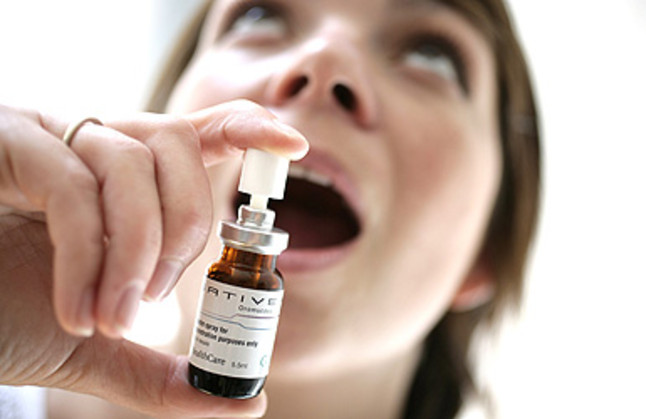
El pasado 28 de julio, la Agencia Española de Medicamentos y Productos Sanitarios (AEMPS) autorizó la comercialización de este medicamento que, a partir de ahora, costeará la Sanidad pública. La entonces ministra de Sanidad, Trinidad Jiménez, ha explicado que el uso terapéutico del cannabis se lleva estudiando desde hace "muchos años", por lo que hay "ensayos clínicos y evidencias científicas" de su utilidad en determinadas enfermedades.
El uso del cannabis para paliar los síntomas de diversas patologías es un asunto muy controvertido, pero pacientes con enfermedades que cursan con dolor recurren a la marihuana para mitigar el sufrimiento.
**Agencia EFE
Carme Ruscalleda y su hijo crean un menú antiedad

Carme Ruscalleda y su hijo, Raül Balam, se ha aliado con la clínica Planas para ofrecer cada mediodía menús antiedad en el Moments, premiado en noviembre con una estrella Michelin. "Son platos con visión científica", resume la chef hexaestrellada (tres por el Sant Pau de Sant Pol de Mar, dos por el homólogo de Tokio y otra por el que dirige su vástago en el paseo de Gràcia). Los cocineros propusieron decenas de recetas al doctor Manuel Sánchez, de la Planas, para que este hiciera la criba. Examinó dónde compraban los productos y cómo los cocinaban, y ordenó qué cantidad debía haber en cada ración.
El menú cambiará cada semana. El que se ofrece ahora (59 euros sin bebidas) incluye un aperitivo (martini comestible con almendras y patatas chips), un entrante (calamares con alcachofas en tres texturas), un plato principal (filete de potro del Pirineo "tiene casi 15 veces más omega 3 que la vaca", con calçots, brócoli "protege del cáncer de mama" y escarola), un postre (crema de limón con naranjas y aguacate) y petit fours (chocolate "es como la aspirina", dice Sánchez) con avellanas y regaliz).
La clave es recuperar el modus operandi de la abuela: producto de proximidad y de temporada. "Hemos quitado artificio a los platos, es una cocina más directa". Hay más pescado que carne, más verduras que salsas... "No es una propuesta para pasarlo mal, sino para sentir placer, como cualquiera de nuestros menús", subrayan los cocineros.
El menú cambiará cada semana. El que se ofrece ahora (59 euros sin bebidas) incluye un aperitivo (martini comestible con almendras y patatas chips), un entrante (calamares con alcachofas en tres texturas), un plato principal (filete de potro del Pirineo "tiene casi 15 veces más omega 3 que la vaca", con calçots, brócoli "protege del cáncer de mama" y escarola), un postre (crema de limón con naranjas y aguacate) y petit fours (chocolate "es como la aspirina", dice Sánchez) con avellanas y regaliz).
La clave es recuperar el modus operandi de la abuela: producto de proximidad y de temporada. "Hemos quitado artificio a los platos, es una cocina más directa". Hay más pescado que carne, más verduras que salsas... "No es una propuesta para pasarlo mal, sino para sentir placer, como cualquiera de nuestros menús", subrayan los cocineros.
Subscribe to:
Comments (Atom)