Traductor

07 February 2012

Despedida por acusar a La Scala de incitar a la anorexia


Una de las primeras bailarinas del ballet de La Scala de Milán, que había criticado la plaga de anorexia entre el cuerpo de baile, ha sido despedida por la dirección en el lanzamiento de la temporada 2012. Mariafrancesca Garritano, de 33 años, ha sido acusada de “dañar la imagen” de La Scala después de afirmar que uno de cada cinco bailarines sufre anorexia.
En una entrevista con el Observer publicada en diciembre, Garritano puso en evidencia al régimen de la escuela de danza de La Scala, donde contó que se la había presionado para que perdiera peso después de su ingreso cuando tenía 16 años. Dijo que todavía sufre dolores intestinales y frecuentes roturas de huesos, que ella cree que están relacionados con la dieta, y denuncia que sus colegas eran incapaces de concebir. “He hablado con personas que están ingresando ahora y parece que nada ha cambiado”, dijo el año pasado.
Carlo Maria Cella, portavoz de La Scala, ha admitido que en el pasado se presionaba con intensidad a las estudiantes, pero desmintió la afirmación de Garritano de que la academia seguía convirtiendo a las bailarinas en anoréxicas. “Decir que La Scala se parece a lo que Garritano afirma que vivió hace 15 años es falso”, dijo Cella. “Los métodos educativos que se usaban entonces no se emplean actualmente, y la escuela tiene un curso de nutrición. Acerca de la imposibilidad para tener niños, nueve de las compañeras de Garritano se han quedado embarazadas en el último año y medio”.


-El portavoz del ballet admite que en el pasado se presionaba con intensidad a las alumnas
Pero un antiguo compañero de Garritano dijo al Observer que no todo estaba correcto hoy en día con las bailarinas. “Una de cada cinco de las de aquella promoción de la escuela tuvieron trastornos alimentarios, y continúan afectadas por graves consecuencias”, ha dicho Michele Villanova, de 47 años. “Lo vi en la manera en que la gente se comportaba, cuando entraban en profundas depresiones si ganaban peso. Es absurdo que La Scala despida a alguien solo por hacer una investigación con profundidad”.
La anorexia y la bulimia fueron reflejadas recientemente en la película Cisne negro, ganadora de un Oscar, en la que la protagonista, interpretada por Natalie Portman, se obliga a vomitar para mantener el peso.
Garritano dijo que sabía que se jugaba el puesto de trabajo por sus revelaciones. Villanova coincide: “Las bailarinas tienen miedo a hablar, y lo que le ha sucedido a Garritano muestra el porqué”. Al recordar sus tiempos en la academia en los ochenta, Villanova dice: “Había un ambiente que hacía que los estudiantes dieran prioridad a su aspecto físico, justo en el momento en que sus cuerpos estaban cambiando. No puedes obsesionarte con perder peso cuando tienes 14 años”.
Después de pasar una corta temporada estudiando en Milán, Villanova fue enviado a continuar su formación en el Bolshói de Moscú. Ahí, afirma, encontró un tratamiento menos draconiano del asunto del peso. “Tenían una cantina con comidas ricas en calorías, y se preocupaban por los alumnos. Si hubiera seguido mi formación en Milán, no creo que hubiera sido capaz de salir adelante”.
No todos los colegas apoyan a Garritano. Varios bailarines de La Scala han reaccionado con hostilidad. Eleonora Abbagnato, de 33 años, que trabaja con la Ópera de París, la ha condenado y dice que solo busca publicidad.


**Publicado en "EL PAIS"

School closures slow spread of pH1N1

Closing elementary and secondary schools can help slow the spread of infectious disease and should be considered as a control measure during pandemic outbreaks, according to a McMaster University led study. Using high-quality data about the incidence of influenza infections in Alberta during the 2009 H1N1 flu pandemic (pH1N1) the researchers show that when schools closed for the summer, the transmission of infection from person to person was sharply reduced.
"Our study demonstrates that school-age children were important drivers of pH1N1 transmission in 2009," says David Earn, lead author of the study published in Annals of Internal Medicine. Earn is professor in the Department of Mathematics and Statistics and member of McMaster's Michael G. DeGroote Institute for Infectious Disease Research (IIDR).
Alberta was the only Canadian province to continue extensive virologic testing throughout the first wave and continuously to the middle of the second wave of the 2009 pandemic, allowing researchers to identify the causes of changes in incidence as the pandemic progressed.
"The data that we obtained were so good that our plots immediately revealed a huge drop in incidence when schools were closed for the summer," says Earn. "Using state-of-the-art modeling, we then demonstrated that transmission was reduced by at least 50 per cent."
The model also indicates that seasonal changes in weather significantly affected influenza transmission in cities in Alberta, but that they were much less important than school closures.
"Our study emphasizes the value of gathering data consistently throughout an outbreak," says Earn. "For example, in Ontario they imposed testing restrictions on June 11, before schools had closed. We couldn't possibly have done this analysis based on other parts of Canada."
Earn and colleagues intend to continue to encourage policy makers to collect data through the course of an infectious disease outbreak. Only by swabbing large numbers of people throughout a pandemic, he says, the effects of various changes in behavior or control strategies are shown.
He adds that this article will help policy makers make the hard decision of whether or not to close schools during a pandemic outbreak.
"This strongly suggests that closing schools as a preventative measure is a strategy worth seriously thinking about. The next time a disease like SARS or the 1918 flu emerges, this paper will give policy makers more confidence that closing schools is likely to significantly reduce the rate of transmission."
The study also involved McMaster investigators Jonathan Dushoff, associate professor of biology, and Mark Loeb, professor and division director of infectious diseases for the Michael G. DeGroote School of Medicine, who are also members of the IIDR.

*Source: McMaster University

3 'targeted' cancer drugs raise risk of fatal side effects


Treatment with three relatively new "targeted" cancer drugs has been linked to a slightly elevated chance of fatal side effects, according to a new analysis led by scientists at Dana-Farber Cancer Institute. They added that the risk remains low, but should be taken into account by physicians and patients. The incidence of fatal complications was 1.5 percent in patients who received any of the three drugs, which block the vascular endothelial growth factor (VEGF) tyrosine kinase receptors in cancer cells, according to the study published February 6 in the Journal of Clinical Oncology. This is compared to a 0.7 percent incidence in patients given standard treatments or placebos.
The study looked at three drugs: sorafenib (Nexavar), sunitinib (Sutent), and pazopanib (Votrient). Sorafenib is approved to treat kidney and liver cancer, sunitinib to treat kidney cancer and gastrointestinal stromal tumor (GIST), and pazopanib to treat kidney cancer.
The authors of the study, led by Dana-Farber's Toni Choueiri, MD, suggest that physicians give full consideration of the potential risk before using the targeted drugs with patients at slightly high risk for bleeding or heart attacks -- the most common fatal adverse events seen in clinical trials. They also recommended that physicians and patients be aware of the risks and to consider if those patients need to be closely monitored.
"There is no doubt for the average patient, these drugs have benefits and are FDA-approved for these indications," said Choueiri. "While the absolute incidence of these fatal side effects is very small, the relative risks are higher and patients and practitioners need to be aware of it."
For example, he said, it might be necessary to temporarily stop treating a patient with the drug or to cancel an elective surgery while a patient is taking one of these drugs. Choueiri added that these drugs should be used cautiously in patients who have had heart attacks. "The patient should be given all the information, and then he or she can balance the pros and cons in deciding whether to take the next step into treatment."
Choueiri said he believed the study is the first meta-analysis of published controlled trials to show a significantly increased risk of death from treatment with these VEGF-tyrosine kinase inhibitors. The majority of patients who died suffered fatal bleeding; the second most common cause was heart attack or heart failure; liver failure was also seen.
The 10 clinical trials subjected to the meta-analysis included 4,679 patients treated with the drugs.
Vascular endothelial growth factor receptor is a tyrosine kinase molecule that responds to chemical signals secreted by tumors to encourage the formation of new blood vessels for the purpose of providing nutrients to support tumor growth. However, humans need vascular endothelial growth factor (VEGF) at low levels to maintain critical to several physiologic processes in the body, including wound-healing, cardiac homeostasis, and formation of new blood vessels in normal tissues. As a result, blocking VEGF to treat cancer can interfere with these normal functions, increasing the odds of adverse effects.


¿Puede un escáner cerebral detectar la pedofilia?

Identificar con gran exactitud si un hombre es o no pedófilo ya es posible gracias al uso de escáneres cerebrales. Así lo ha reconocido a ELMUNDO.es Jorge Ponseti, de la Sección de Medicina Sexual de la Universidad de Kiel (Alemania), tras publicar un estudio en el último 'Archives of General Psychiatric'.
La investigación ha sido llevada a cabo "con 24 pedófilos, que admitían su condición y que se sentían atraídos por niños o niñas prepúberes, y que estaban recibiendo tratamiento en nuestro centro. A todos ellos los comparamos con 32 adultos sanos a los que les gustaban bien mujeres, bien hombres", reconoce. Así han podido confirmar que "efectivamente, la respuesta cerebral a los estímulos sexuales, visto con resonancia magnética funcional, contiene información suficiente para identificar a los pedófilos con gran exactitud", defiende este experto.
Algunos ensayos anteriores han encontrado diferencias en la anatomía cerebral de los que se sienten atraídos sexualmente por menores, "pero estos cambios estructurales no han sido confirmados a través de los diferentes estudios. A nosotros no nos interesaba saber en qué parte del cerebro se encuentran estas diferencias anatómicas, sino si existen diferencias funcionales y si pueden servir para un uso diagnóstico individual".
Para ello mostraron a todos los participantes de entre 20 y 50 años una serie de fotografías de genitales de niños y niñas, de menores desnudos o sólo de sus caras, así como de adultos en las mismas posturas. "Las imágenes se mostraron sólo durante un segundo. En este tiempo, el cerebro reacciona al estímulo antes de que la persona sea consciente realmente de él, por lo que la respuesta no puede ser engañosa. Además, y para asegurarnos de que estaban atentos a las imágenes, las intercambiamos con fotografías sin contenido erótico en las que aparecía un círculo verde. Ellos debían pulsar un botón cada vez que las visualizaran".

-Los resultados
Los datos revelan que las áreas del cerebro que "actúan en los mecanismos de recompensa, cuando algo nos gusta, y que están relacionados con la sexualidad, son similares en el grupo de pedófilos que en el grupo control. Lo que sucede es que la respuesta neuronal de los pedófilos ante las imágenes de niños desnudos es distinta de la de las personas sanas. En otras palabras, en las personas sanas no se produce estímulo al ver fotos de menores", insiste el director de la investigación.
Posteriormente, los científicos alemanes llevaron a cabo un segundo análisis en el que se comparaba la actividad neuronal de cada participante con la de ambos grupos, el de pedofilia y el control.
"Introdujimos los datos en el ordenador con el fin de averiguar si dicha actividad cerebral correspondía al grupo de afectados de pedofilia o al de sanos. Finalmente, y tras varios algoritmos informáticos, pudimos establecer si una persona tenía altas o bajas probabilidades de ser pedófilo. En el 95% de los participantes esta decisión fue correcta", reconoce Jorge Ponseti. Y todo "con un 100% de especificidad (la probabilidad de que para un sujeto sano se obtenga un resultado negativo en la prueba) y un 88% de sensibilidad (la probabilidad de que para un sujeto enfermo se obtenga en la prueba un resultado positivo).
Aclara que durante la realización del ensayo "hemos discutido mucho sobre la aplicación de la RM como herramienta de diagnóstico en la pedofilia y los aspectos éticos que le rodean. Porque el interés por un menor, por ejemplo, no significa que se vaya a abusar de él", añade.

-El futuro
De hecho, aclara "cuando un adulto comete un único delito con un menor tiene un 50% de posibilidades de ser pedófilo, porque pueden existir otros componentes como es el del miedo a acercarse a una mujer adulta o que haya tomado alcohol, drogas, etcétera. Cuando los delitos son cinco, por poner un ejemplo, sabemos que sí lo es. Nosotros queremos esta prueba, que consideramos objetiva, para poder establecer quién se va a beneficiar realmente de la terapia de la pedofilia, que puede consistir en fármacos que inhiben la actividad sexual. Los otros casos se tratarán de forma distinta, con psicoterapia encaminada a reconducir la sexualidad".
El científico Ponseti admite que ya está pensando en sus estudios futuros. "Ahora queremos hacer el mismo trabajo pero con pedófilos que no reconocen que lo son, algo que le sucede a la mayoría, y con hombres sanos a los que vamos a pedir que intenten controlar sus impulsos, sus respuestas, para ver si pueden 'engañar' al escáner".

**Publicado en "EL MUNDO"

Exercise triggers stem cells in muscle


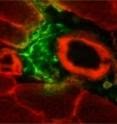
University of Illinois researchers determined that an adult stem cell present in muscle is responsive to exercise, a discovery that may provide a link between exercise and muscle health. The findings could lead to new therapeutic techniques using these cells to rehabilitate injured muscle and prevent or restore muscle loss with age. Mesenchymal stem cells (MSCs) in skeletal muscle have been known to be important for muscle repair in response to non-physiological injury, predominantly in response to chemical injections that significantly damage muscle tissue and induce inflammation. The researchers, led by kinesiology and community health professor Marni Boppart, investigated whether MSCs also responded to strain during exercise, and if so, how.
"Since exercise can induce some injury as part of the remodeling process following mechanical strain, we wondered if MSC accumulation was a natural response to exercise and whether these cells contributed to the beneficial regeneration and growth process that occurs post-exercise," said Boppart, who also is affiliated with the Beckman Institute for Advanced Science and Technology at the U. of I.
The researchers found that MSCs in muscle are very responsive to mechanical strain. They witnessed MSC accumulation in muscle of mice after vigorous exercise. Then, they determined that although MSCs don't directly contribute to building new muscle fibers, they release growth factors that spur other cells in muscle to fuse and generate new muscle, providing the cellular basis for enhanced muscle health following exercise.
A key element to the Illinois team's method was in exercising the mice before isolating the cells to trigger secretion of beneficial growth factors. Then, they dyed the cells with a fluorescent marker and injected them into other mice to see how MSCs coordinated with other muscle-building cells.
In addition to examining the cells in vivo, the researchers studied the cells' response to strain on different substrates. They found that MSC response is very sensitive to the mechanical environment, indicating that conditions of muscle strain affect the cells' activity.
"These findings are important because we've identified an adult stem cell in muscle that may provide the basis for muscle health with exercise and enhanced muscle healing with rehabilitation/movement therapy," Boppart said. "The fact that MSCs in muscle have the potential to release high concentrations of growth factor into the circulatory system during exercise also makes us wonder if they provide a critical link between enhanced whole-body health and participation in routine physical activity."
Next, the group hopes to determine whether these cells contribute to the decline in muscle mass over a person's lifetime. Preliminary data suggest MSCs become deficient in muscle with age. The team hopes to develop a combinatorial therapy that utilizes molecular and stem-cell-based strategies to prevent age-related muscle loss.
"Although exercise is the best strategy for preserving muscle as we age, some individuals are just not able to effectively engage in physical activity," Boppart said. "Disabilities can limit opportunities for muscle growth. We're working hard to understand how we can best utilize these cells effectively to preserve muscle mass in the face of atrophy."
The team published its findings in the journal PLoS One. The Illinois Regenerative Medicine Institute, the Ellison Medical Foundation and the Mary Jane Neer Foundation supported this work.


Un estudio dice que el castigo físico puede cambiar áreas en el cerebro vinculadas al rendimiento en pruebas de coeficiente de inteligencia

Un estudio publicado hoy en la Revista de la Asociación Médica Canadiense (CMAJ, siglas en inglés) indica que los niños a los que se castiga físicamente se vuelven más agresivos y pueden sufrir problemas de desarrollo intelectual.
En el estudio, los doctores Joan Durrant y Ron Emson, analizaron investigaciones realizadas durante los pasados 20 años sobre castigos corporales y concluyeron que "sin ninguna excepción" la conclusión es un aumento de la agresividad hacia padres, hermanos y otros niños y posteriormente sus parejas.
"Virtualmente sin ninguna excepción, estos estudios desvelaron que el castigo físico estaba asociado con mayores niveles de agresión" afirmaron la doctora Joan Durrant, del Departamento de Ciencias Sociales de la Familia de la Universidad de Manitoba y Ron Emson, del Hospital Infantil del Este de Ontario.
Los autores añadieron que "los resultados sugieren de forma consistente que el castigo corporal tiene un efecto causal directo en la exteriorización de comportamiento, ya sea a través de una respuesta reflexiva al dolor, modelización (se alienta un tipo de comportamiento con el ejemplo) o procesos familiares coercitivos". El estudio también indica que el castigo físico está asociado con problemas mentales como depresión, ansiedad y el consumo de drogas y alcohol.
Una teoría es que el castigo físico puede cambiar áreas en el cerebro vinculadas al rendimiento en pruebas de coeficiente de inteligencia y aumenta la vulnerabilidad de la dependencia de drogas y alcohol

**AGENCIAS

Metabolic 'breathalyzer' reveals early signs of disease

The future of disease diagnosis may lie in a "breathalyzer"-like technology currently under development at the University of Wisconsin-Madison. New research published online in February in the peer-reviewed journal Metabolism demonstrates a simple but sensitive method that can distinguish normal and disease-state glucose metabolism by a quick assay of blood or exhaled air.
Many diseases, including diabetes, cancer, and infections, alter the body's metabolism in distinctive ways. The new work shows that these biochemical changes can be detected much sooner than typical symptoms would appear -- even within a few hours -- offering hope of early disease detection and diagnosis.
"With this methodology, we have advanced methods for tracing metabolic pathways that are perturbed in disease," says senior author Fariba Assadi-Porter, a UW-Madison biochemist and scientist at the Nuclear Magnetic Resonance Facility at Madison. "It's a cheaper, faster, and more sensitive method of diagnosis."
The researchers studied mice with metabolic symptoms similar to those seen in women with polycystic ovary syndrome (PCOS), an endocrine disorder that can cause a wide range of symptoms including infertility, ovarian cysts, and metabolic dysfunction. PCOS affects approximately 1 in 10 women but currently can only be diagnosed after puberty and by exclusion of all other likely diseases -- a time-consuming and frustrating process for patients and doctors alike.
"The goal is to find a better way of diagnosing these women early on, before puberty, when the disease can be controlled by medication or exercise and diet, and to prevent these women from getting metabolic syndromes like diabetes, obesity, and associated problems like heart disease," Assadi-Porter says.
The researchers were able to detect distinct metabolic changes in the mice by measuring the isotopic signatures of carbon-containing metabolic byproducts in the blood or breath. They injected glucose containing a single atom of the heavier isotope carbon-13 to trace which metabolic pathways were most active in the sick or healthy mice. Within minutes, they could measure changes in the ratio of carbon-12 to carbon-13 in the carbon dioxide exhaled by the mice, says co-author Warren Porter, a UW-Madison professor of zoology.
One advantage of the approach is that it surveys the workings of the entire body with a single measure. In addition to simplifying diagnosis, it could also provide rapid feedback about the effectiveness of treatments.
"The pattern of these ratios in blood or breath is different for different diseases -- for example cancer, diabetes, or obesity -- which makes this applicable to a wide range of diseases," explains Assadi-Porter.
The technology relies on the fact that the body uses different sources to produce energy under different conditions. "Your body changes its fuel source. When we're healthy we use the food that we eat," Porter says. "When we get sick, the immune system takes over the body and starts tearing apart proteins to make antibodies and use them as an energy source."
That shift from sugars to proteins engages different biochemical pathways in the body, resulting in distinct changes in the carbon isotopes that show up in exhaled carbon dioxide. If detected quickly, these changes may signal the earliest stages of disease.
The researchers found similar patterns using two independent assays -- nuclear magnetic resonance spectroscopy on blood serum and cavity ring-down spectroscopy on exhaled breath. The breath-based method is particularly exciting, they say, because it is non-invasive and even more sensitive than the blood-based assays.
In the mice, the techniques were sensitive enough to detect statistically significant differences between even very small populations of healthy and sick mice.
The current cavity ring-down spectroscopy analysis uses a machine about the size of a shoebox, but the researchers envision a small, hand-held "breathalyzer" that could easily be taken into rural or remote areas. They co-founded a company, Isomark, LLC, to develop the technology and its applications. They hope to explore the underlying biology of disease and better understand whether the distinctive biochemical changes they can observe are causative or side effects.

**Source: University of Wisconsin-Madison

CONTACTO · Aviso Legal · Política de Privacidad · Política de Cookies

Copyright © Noticia de Salud