Preschool children consumed nearly twice as many vegetables and 11 percent fewer calories over the course of a day when researchers Penn State added pureed vegetables to the children's favorite foods. "Childhood obesity rates are on the rise, and at the same time children are not eating the recommended amount of vegetables," said Barbara Rolls, holder of the Helen A. Guthrie Chair in Nutritional Sciences. "Vegetables have been shown to help lower calorie intake. The problem is getting kids to eat enough vegetables."
In their study, the researchers served vegetable-enhanced entrées to 39 children between the ages of 3 and 6 on three separate days. They tested three familiar foods -- zucchini bread for breakfast, pasta with a tomato-based sauce for lunch and chicken noodle casserole for dinner. The team modified the standard recipes for these foods by adding a variety of puréed vegetables to reduce the calories in the entrées by 15 percent and 25 percent.
"We incorporated several vegetables into the dishes, including broccoli, cauliflower, zucchini, tomatoes and squash," said Maureen Spill, a post-doctoral fellow in nutritional sciences and the study's lead author. "We were pleased to find that the children found the vegetable-enhanced versions to be equally acceptable to the standard recipes."
According to Spill, the children ate the same weight of food regardless of the vegetable content of the entrées. And when they ate the vegetable-enhanced entrées as opposed to the standard-recipe entrées, their daily vegetable intake nearly doubled while their calorie intake decreased by 11 percent. The team's findings are online today in the American Journal of Clinical Nutrition.
Rolls and Penn State colleagues Alexandria Blatt, a recent Ph.D. recipient and Liane Roe, a researcher, both in nutritional sciences, found similar results when they served vegetable-enhanced entrées to adults. That work appeared in the April 2011 issue of the American Journal of Clinical Nutrition.
"Regarding children, some people argue that hiding vegetables in foods is deceptive and that doing so suggests that whole vegetables are not acceptable," said Rolls. "But I don't agree. Parents modify recipes all the time. For example, it is well-accepted that applesauce can be used to replace oil in cake batter."
Spill noted that serving vegetables both within entrées and as side dishes is a great way to increase daily vegetable intake even more. "Preparing vegetable-enhanced entrées is a technique that should be used with other strategies, such as providing vegetables as snacks and side dishes. Together these strategies can substantially increase children's vegetable intake while also teaching them to like vegetables."
**Source: Penn State
26 July 2011
New study finds cancer-causing mineral in US road gravel
As school buses drive down the gravel roads in Dunn County, North Dakota, they stir up more than dirt. The clouds of dust left in their wake contain such high levels of the mineral erionite that those who breathe in the air every day are at an increased risk of developing mesothelioma, a type of cancer of the membranes around the lungs, new research shows. Erionite is a natural mineral fiber that shares similar physical similarities with asbestos. When it's disturbed by human activity, fibers can become airborne and lodge themselves in people's lungs. Over time, the embedded fibers can make cells of the lung grow abnormally, leading to mesothelioma, a form of lung cancer most often associated with the related mineral asbestos. Michele Carbone, M.D., Ph.D., director of the University of Hawaii Cancer Center in Honolulu, has previously linked erionite exposure in some Turkish villages to unusually high rates of mesothelioma. Recently, he and colleagues turned their attention to potential erionite exposure in the U.S., where at least 12 states have erionite-containing rock deposits. His research team—which includes scientists from the National Institute of Environmental Health Sciences, Environmental Protection Agency, New York University, University of Chicago, University of Iowa, and University of Hacettepe—focused their efforts on Dunn County, North Dakota, when they learned that rocks containing erionite have been used to produce gravel for the past 30 years. More than 300 miles of roads are now paved with the gravel. The new study, reported in the July 25, 2011 issue of Proceedings of the National Academy of Sciences (PNAS) is the first to look at the potential hazards associated with erionite exposure in the U.S.
The scientists compared the erionite in North Dakota to erionite from the Turkish villages with high mesothelioma rates. They measured airborne concentrations of the mineral in various settings, studied its chemical composition, and analyzed its biological activity. When mice were injected with the erionite from Dunn County, their lungs showed signs of inflammation and abnormal cell growth, precursors to mesothelioma. Under the microscope, the fiber size of the erionite from North Dakota was similar to that of the Turkish erionite. Overall, the researchers found no chemical differences between the North Dakota erionite and samples of the cancer-causing mineral from Turkey. The airborne levels of erionite in North Dakota were comparable to levels found in Turkish villages with 6-8 percent mortality rates from mesothelioma, the researchers reported.
"Based on the similarity between the erionite from the two sources," says Carbone, "there is concern for increased risk of mesothelioma in North Dakota." The long latency period of the disease—it can take 30 to 60 years of exposure to cause mesothelioma—and the fact that many erionite deposits have only been mined in the past few decades suggests that the number of cases could soon be on the rise. In addition to North Dakota, California, Oregon, Arizona, Nevada and other states have erionite deposit, but the possibility of human exposure elsewhere in the U.S. has not yet been investigated.
In contrast to asbestos, which causes mesothelioma at lower rates, there are no established health benchmarks in the U.S. on safe levels of erionite exposure, because until recently, physicians thought that erionate was present only in Turkey. The new findings, however, indicate that precautionary measures should be put in place to reduce exposure to the mineral, says Carbone. In Turkey, his earlier findings led to moving villagers away from areas with high levels of erionite, into new housing built out of erionite-free materials. "Our findings provide an opportunity to implement novel preventive and detection programs in the U.S. similar to what we have been doing in Turkey," he says. Future studies could analyze erionite levels in other areas of the U.S. and develop strategies to prevent and screen for mesothelioma. The study was funded through grants from the National Cancer Institute and the 2008 AACR-Landon Innovator Award for International Collaboration in Cancer Research to Michele Carbone.
**Source: University of Hawaii Cancer Center
The scientists compared the erionite in North Dakota to erionite from the Turkish villages with high mesothelioma rates. They measured airborne concentrations of the mineral in various settings, studied its chemical composition, and analyzed its biological activity. When mice were injected with the erionite from Dunn County, their lungs showed signs of inflammation and abnormal cell growth, precursors to mesothelioma. Under the microscope, the fiber size of the erionite from North Dakota was similar to that of the Turkish erionite. Overall, the researchers found no chemical differences between the North Dakota erionite and samples of the cancer-causing mineral from Turkey. The airborne levels of erionite in North Dakota were comparable to levels found in Turkish villages with 6-8 percent mortality rates from mesothelioma, the researchers reported.
"Based on the similarity between the erionite from the two sources," says Carbone, "there is concern for increased risk of mesothelioma in North Dakota." The long latency period of the disease—it can take 30 to 60 years of exposure to cause mesothelioma—and the fact that many erionite deposits have only been mined in the past few decades suggests that the number of cases could soon be on the rise. In addition to North Dakota, California, Oregon, Arizona, Nevada and other states have erionite deposit, but the possibility of human exposure elsewhere in the U.S. has not yet been investigated.
In contrast to asbestos, which causes mesothelioma at lower rates, there are no established health benchmarks in the U.S. on safe levels of erionite exposure, because until recently, physicians thought that erionate was present only in Turkey. The new findings, however, indicate that precautionary measures should be put in place to reduce exposure to the mineral, says Carbone. In Turkey, his earlier findings led to moving villagers away from areas with high levels of erionite, into new housing built out of erionite-free materials. "Our findings provide an opportunity to implement novel preventive and detection programs in the U.S. similar to what we have been doing in Turkey," he says. Future studies could analyze erionite levels in other areas of the U.S. and develop strategies to prevent and screen for mesothelioma. The study was funded through grants from the National Cancer Institute and the 2008 AACR-Landon Innovator Award for International Collaboration in Cancer Research to Michele Carbone.
**Source: University of Hawaii Cancer Center
Universal donor immune cells
One of the latest attempts to boost the body's defenses against cancer is called adoptive cell transfer, in which patients receive a therapeutic injection of their own immune cells. This therapy, currently tested in early clinical trials for melanoma and neuroblastoma, has its limitations: Removing immune cells from a patient and growing them outside the body for future re-injection is extremely expensive and not always technically feasible. Weizmann Institute scientists have now tested in mice a new form of adoptive cell transfer, which overcomes these limitations while enhancing the tumor-fighting ability of the transferred cells. The research, reported recently in Blood, was performed in the lab of Prof. Zelig Eshhar of the Institute's Immunology Department, by graduate student Assaf Marcus and lab technician Tova Waks.
The new approach should be more readily applicable than existing adoptive cell transfer treatments because it relies on a donor pool of immune T cells that can be prepared in advance, rather than on the patient's own cells. Moreover, using a method pioneered by Prof. Eshhar more than two decades ago, these T cells are outfitted with receptors that specifically seek out and identify the tumor, thereby promoting its destruction.
In the study, the scientists first suppressed the immune system of mice with a relatively mild dose of radiation. They then administered a controlled dose of the modified donor T cells. The mild suppression temporarily prevented the donor T cells from being rejected by the recipient, but it didn't prevent the cells themselves from attacking the recipient's body, particularly the tumor. This approach was precisely what rendered the therapy so effective: The delay in the rejection of the donor T cells gave these cells sufficient opportunity to destroy the tumor.
If this method works in humans as well as it did in mice, it could lead to an affordable cell transfer therapy for a wide variety of cancers. Such therapy would rely on an off-the-shelf pool of donor T cells equipped with receptors for zeroing in on different types of cancerous cells.
**Source: Weizmann Institute of Science
The new approach should be more readily applicable than existing adoptive cell transfer treatments because it relies on a donor pool of immune T cells that can be prepared in advance, rather than on the patient's own cells. Moreover, using a method pioneered by Prof. Eshhar more than two decades ago, these T cells are outfitted with receptors that specifically seek out and identify the tumor, thereby promoting its destruction.
In the study, the scientists first suppressed the immune system of mice with a relatively mild dose of radiation. They then administered a controlled dose of the modified donor T cells. The mild suppression temporarily prevented the donor T cells from being rejected by the recipient, but it didn't prevent the cells themselves from attacking the recipient's body, particularly the tumor. This approach was precisely what rendered the therapy so effective: The delay in the rejection of the donor T cells gave these cells sufficient opportunity to destroy the tumor.
If this method works in humans as well as it did in mice, it could lead to an affordable cell transfer therapy for a wide variety of cancers. Such therapy would rely on an off-the-shelf pool of donor T cells equipped with receptors for zeroing in on different types of cancerous cells.
**Source: Weizmann Institute of Science
Antibiotic appears more effective than cranberry capsules for preventing urinary tract infections
In premenopausal women who have repeated urinary tract infections (UTIs), the antibiotic trimethoprim-sulfamethoxazole (TMP-SMX) appeared more effective than cranberry capsules for preventing recurrent infections, at the risk of contributing to antibiotic resistance, according to a report in the July 25 issue of Archives of Internal Medicine, one of the JAMA/Archives journals. Urinary tract infections are common in women, affecting nearly half at some point in their lives, according to background information in the article. The authors note that up to 30 percent of women develop recurrent UTIs (rUTIs), a condition for which a low-dose antibiotic is frequently used as a preventive measure. "However, this may lead to drug resistance not only of the causative microorganisms but also of the indigenous flora," write the authors. Studies of cranberries and cranberry products have shown some effectiveness in preventing rUTIs, but these trials have not compared those interventions directly with TMP-SMX, the standard antibiotic used in these cases.
Mariëlle A.J. Beerepoot, M.D., from the Academic Medical Center, Amsterdam, and colleagues conducted a double-blind noninferiority trial of cranberry capsules and TMP-SMX. The 221 participants were premenopausal adult women who had reported at least three symptomatic UTIs in the previous year. They were randomized to take either TMP-SMX (480 mg at night, plus one placebo capsule twice daily) or cranberry capsules (500 mg twice daily, plus one placebo tablet at night) for 12 months. Researchers assessed participants' clinical status once a month (and for three months after stopping the study medication) via urine and feces samples and a questionnaire; participants also submitted urine samples when they experienced UTI-like symptoms.
At 12 months, the average number of clinical recurrences was 1.8 in the TMP-SMX group and 4.0 in the cranberry capsules group. Recurrence occurred, on average, after eight months in the drug group and after four months in the cranberry capsules group. Antibiotic resistance rates tripled in the pathogens found in patients in the TMP-SMX group, although three months after the drug was discontinued, resistance rates returned to the levels they had been at when the study began.
The antibiotic used in this study appeared to be more effective at preventing rUTIs than cranberry capsules, but the researchers noted that achieving this result also seemed to increase the rate of antibiotic resistance. "From clinical practice and during the recruitment phase of this study, we learned that many women are afraid of contracting drug-resistant bacteria using long-term antibiotic prophylaxis and preferred either no or nonantibiotic prophylaxis," they report. "In those women, cranberry prophylaxis may be a useful alternative despite its lower effectiveness."
(Arch Intern Med. 2011;171[14]:1270-1278. Available pre-embargo to the media at www.jamamedia.org.)
Editor's Note: This study was supported by a grant from the Netherlands Organization for Health Research and Development. The authors received the cranberry and placebo capsules from Springfield Nutraceuticals BV, Oud Beijerland, the Netherlands. Please see the article for additional information, including other authors, author contributions and affiliations, financial disclosures, funding and support, etc.
--Commentary: Cranberries as Antibiotics?
An accompanying commentary by Bill J. Gurley, Ph.D., from the University of Arkansas for Medical Sciences, Little Rock, evaluates the results obtained by Beerepoot and colleagues in the context of nonpharmacologic remedies. Botanical dietary supplements are not intended to be used to treat, cure or prevent disease, he writes, but "most U.S. consumers, however, have expectations of health benefits from the dietary supplements they consume." Nevertheless, supplements such as cranberry capsules may not demonstrate optimal efficacy due to issues with poor water solubility and the type of metabolism that occurs.
Dr. Gurley notes that the report by Beerepoot and colleagues has two important features. Given that one month into the study, antibiotic resistance for Escherichia coli was higher than 85 percent in the TMP-SMX group but less than 30 percent in the cranberry capsule group, "such a marked reduction in antibiotic resistance certainly favors the therapeutic potential of cranberry as a natural UTI preventative." Further, Gurley points out that TMP-SMX showed superior efficacy to cranberry capsules, but that the low rate of bioavailability of bacteria-fighting chemicals in the dosage used of the latter may have affected the study's results. "Because optimal doses have not been established for many botanicals, clinical efficacy trials have often yielded negative or inconclusive results," Gurley points out. He mentions an ongoing dose-ranging study for cranberry that may provide more information on this supplement's effectiveness.
**Source: JAMA and Archives Journals
Mariëlle A.J. Beerepoot, M.D., from the Academic Medical Center, Amsterdam, and colleagues conducted a double-blind noninferiority trial of cranberry capsules and TMP-SMX. The 221 participants were premenopausal adult women who had reported at least three symptomatic UTIs in the previous year. They were randomized to take either TMP-SMX (480 mg at night, plus one placebo capsule twice daily) or cranberry capsules (500 mg twice daily, plus one placebo tablet at night) for 12 months. Researchers assessed participants' clinical status once a month (and for three months after stopping the study medication) via urine and feces samples and a questionnaire; participants also submitted urine samples when they experienced UTI-like symptoms.
At 12 months, the average number of clinical recurrences was 1.8 in the TMP-SMX group and 4.0 in the cranberry capsules group. Recurrence occurred, on average, after eight months in the drug group and after four months in the cranberry capsules group. Antibiotic resistance rates tripled in the pathogens found in patients in the TMP-SMX group, although three months after the drug was discontinued, resistance rates returned to the levels they had been at when the study began.
The antibiotic used in this study appeared to be more effective at preventing rUTIs than cranberry capsules, but the researchers noted that achieving this result also seemed to increase the rate of antibiotic resistance. "From clinical practice and during the recruitment phase of this study, we learned that many women are afraid of contracting drug-resistant bacteria using long-term antibiotic prophylaxis and preferred either no or nonantibiotic prophylaxis," they report. "In those women, cranberry prophylaxis may be a useful alternative despite its lower effectiveness."
(Arch Intern Med. 2011;171[14]:1270-1278. Available pre-embargo to the media at www.jamamedia.org.)
Editor's Note: This study was supported by a grant from the Netherlands Organization for Health Research and Development. The authors received the cranberry and placebo capsules from Springfield Nutraceuticals BV, Oud Beijerland, the Netherlands. Please see the article for additional information, including other authors, author contributions and affiliations, financial disclosures, funding and support, etc.
--Commentary: Cranberries as Antibiotics?
An accompanying commentary by Bill J. Gurley, Ph.D., from the University of Arkansas for Medical Sciences, Little Rock, evaluates the results obtained by Beerepoot and colleagues in the context of nonpharmacologic remedies. Botanical dietary supplements are not intended to be used to treat, cure or prevent disease, he writes, but "most U.S. consumers, however, have expectations of health benefits from the dietary supplements they consume." Nevertheless, supplements such as cranberry capsules may not demonstrate optimal efficacy due to issues with poor water solubility and the type of metabolism that occurs.
Dr. Gurley notes that the report by Beerepoot and colleagues has two important features. Given that one month into the study, antibiotic resistance for Escherichia coli was higher than 85 percent in the TMP-SMX group but less than 30 percent in the cranberry capsule group, "such a marked reduction in antibiotic resistance certainly favors the therapeutic potential of cranberry as a natural UTI preventative." Further, Gurley points out that TMP-SMX showed superior efficacy to cranberry capsules, but that the low rate of bioavailability of bacteria-fighting chemicals in the dosage used of the latter may have affected the study's results. "Because optimal doses have not been established for many botanicals, clinical efficacy trials have often yielded negative or inconclusive results," Gurley points out. He mentions an ongoing dose-ranging study for cranberry that may provide more information on this supplement's effectiveness.
**Source: JAMA and Archives Journals
25 July 2011
Salud comienza la contratación de profesionales de 6 categorías tras actualizar sus sus méritos en la Bolsa Única de Empleo
La Consejería de Salud inicia a partir de mañana la contratación de los facultativos especialistas de área de Cirugía Oral y Maxilofacial, Neurocirugía, Médico de familia en plaza diferenciada de Centros de Transfusión Sanguínea, así como de técnicos superiores en Alojamiento, peones, y de personal de lavandería y planchado. Los contratos se ofrecerán una vez se han actualizado sus puntuaciones en la Bolsa Única de Empleo del Servicio Andaluz de Salud (SAS) a 31 de octubre de 2010.
Como acto previo a la llamada de estos profesionales, la Dirección General de Personal publica hoy, a través de la página web del SAS (www.juntadeandalucia.es/servicioandaluzdesalud), en el apartado de la Bolsa Única, el listado definitivo de los candidatos ordenados por la baremación obtenida.
De este modo, los profesionales podrán consultar desde esta tarde la posición lograda en el centro elegido según el sistema de acceso (libre, promoción interna y reserva de discapacitados). Asimismo, podrán visualizar el tipo de vinculación temporal –si es de corta o larga duración-.
Con esta publicación se lleva a cabo la última actualización de baremo de seis categorías profesionales de personal que, sumadas a las 77 publicadas entre abril, mayo y junio, alcanza un total de 83 categorías que han finalizado la baremación completa de méritos, lo que supone el 87% del total de las existentes. En concreto, para la publicación que se realiza hoy, las comisiones de valoración han verificado un total de 2.997 expedientes, 205 de ellos correspondientes a las categorías de personal sanitario y otros 2.792 a las de gestión y servicios.
Los candidatos pueden consultar su puntuación definitiva del listado único de aspirantes a través de la página web del Servicio Andaluz de Salud (www.juntadeandalucia.es/servicioandaluzdesalud), en el icono ‘Histórico de Baremos’ del menú ‘Informes’.
-Listado Único
Los listados incluyen los nombres de los candidatos ordenados por la puntuación de baremo, una vez resueltas por las Comisiones de Valoración las alegaciones presentadas contra las actualizaciones de dicho listado único de aspirantes, tal y como recoge la convocatoria de bolsa. En dicho listado único, consta la experiencia en el SAS, la puntuación consignada por los aspirantes en el autobaremo de méritos alegados por los mismos y la puntuación definitiva obtenida en cada apartado del baremo (experiencia fuera del SAS, formación y otros méritos) tras la validación de méritos efectuada por las Comisiones de Valoración.
Igualmente, se publica el listado definitivo de personas candidatas excluidas con indicación de la causa de exclusión, así como de aquellas que una vez baremadas no alcanzan la puntuación mínima para formar parte de la Bolsa de Empleo Temporal.
Además, con el objetivo de facilitar la búsqueda de aspirantes en los listados, aparecerán ordenados por apellidos y nombre.
En total, la Bolsa Única de Empleo incluye más de 700.000 solicitudes registradas correspondientes a aspirantes de categorías de personal sanitario y de gestión y servicios. Este modelo es un sistema de selección de personal temporal que persigue garantizar la máxima eficacia, objetividad, agilidad y transparencia en el proceso, que fue consensuado en 2005 con todos los sindicatos en la Mesa Sectorial de Sanidad y actualizado en mayo de 2010.
El sistema está basado en la igualdad ya que los profesionales podrán optar a los nombramientos temporales de corta y larga duración sin tener que inscribirse, como se venía haciendo tradicionalmente, en las bolsas de empleo provinciales.
Desde el inicio de bolsa y hasta la actualidad, el Servicio Andaluz de Salud ha realizado 183.669 contrataciones a través de la bolsa, de las que más de 125.675 corresponden a categorías de personal sanitario y más de 57.994 de gestión y servicios.
Como acto previo a la llamada de estos profesionales, la Dirección General de Personal publica hoy, a través de la página web del SAS (www.juntadeandalucia.es/servicioandaluzdesalud), en el apartado de la Bolsa Única, el listado definitivo de los candidatos ordenados por la baremación obtenida.
De este modo, los profesionales podrán consultar desde esta tarde la posición lograda en el centro elegido según el sistema de acceso (libre, promoción interna y reserva de discapacitados). Asimismo, podrán visualizar el tipo de vinculación temporal –si es de corta o larga duración-.
Con esta publicación se lleva a cabo la última actualización de baremo de seis categorías profesionales de personal que, sumadas a las 77 publicadas entre abril, mayo y junio, alcanza un total de 83 categorías que han finalizado la baremación completa de méritos, lo que supone el 87% del total de las existentes. En concreto, para la publicación que se realiza hoy, las comisiones de valoración han verificado un total de 2.997 expedientes, 205 de ellos correspondientes a las categorías de personal sanitario y otros 2.792 a las de gestión y servicios.
Los candidatos pueden consultar su puntuación definitiva del listado único de aspirantes a través de la página web del Servicio Andaluz de Salud (www.juntadeandalucia.es/servicioandaluzdesalud), en el icono ‘Histórico de Baremos’ del menú ‘Informes’.
-Listado Único
Los listados incluyen los nombres de los candidatos ordenados por la puntuación de baremo, una vez resueltas por las Comisiones de Valoración las alegaciones presentadas contra las actualizaciones de dicho listado único de aspirantes, tal y como recoge la convocatoria de bolsa. En dicho listado único, consta la experiencia en el SAS, la puntuación consignada por los aspirantes en el autobaremo de méritos alegados por los mismos y la puntuación definitiva obtenida en cada apartado del baremo (experiencia fuera del SAS, formación y otros méritos) tras la validación de méritos efectuada por las Comisiones de Valoración.
Igualmente, se publica el listado definitivo de personas candidatas excluidas con indicación de la causa de exclusión, así como de aquellas que una vez baremadas no alcanzan la puntuación mínima para formar parte de la Bolsa de Empleo Temporal.
Además, con el objetivo de facilitar la búsqueda de aspirantes en los listados, aparecerán ordenados por apellidos y nombre.
En total, la Bolsa Única de Empleo incluye más de 700.000 solicitudes registradas correspondientes a aspirantes de categorías de personal sanitario y de gestión y servicios. Este modelo es un sistema de selección de personal temporal que persigue garantizar la máxima eficacia, objetividad, agilidad y transparencia en el proceso, que fue consensuado en 2005 con todos los sindicatos en la Mesa Sectorial de Sanidad y actualizado en mayo de 2010.
El sistema está basado en la igualdad ya que los profesionales podrán optar a los nombramientos temporales de corta y larga duración sin tener que inscribirse, como se venía haciendo tradicionalmente, en las bolsas de empleo provinciales.
Desde el inicio de bolsa y hasta la actualidad, el Servicio Andaluz de Salud ha realizado 183.669 contrataciones a través de la bolsa, de las que más de 125.675 corresponden a categorías de personal sanitario y más de 57.994 de gestión y servicios.
Los marcapasos inteligentes mejoran la calidad de vida

Los marcapasos han sufrido en los últimos años una revolución tan notable que la historia de sueco Arne Larson parece de otra época. Larson, que fue el primer paciente al que le fue implantado con éxito un dispositivo, en 1958, necesitó llevar 28 modelos con otras tantas operaciones durante las más de cuatro décadas que transcurrieron hasta su fallecimiento por un melanoma en el 2001. Hoy, al margen de mejorar la calidad de vida del paciente, habrían bastado cinco cambios de batería que se habrían efectuado sin necesidad --salvo excepciones-- de una cirugía compleja. "Y esto no ha hecho más que empezar", asegura Ignacio Fernández Lozano, presidente de la Sección de Electrofisiología y Arritmias de la Sociedad Española de Cardiología (SEC) y médico del Hospital Puerta de Hierro de Madrid. Colocar un marcapasos se ha convertido en una intervención "casi rutinaria", añade Lluís Mont, jefe de la Unidad de Arritmias del Hospital Clínic de Barcelona, que es el centro líder en España en implantes de este tipo (cuatro al día). En total, cada año se ponen unos 34.000.
El corazón tiene un ritmo marcado por sus propias células, que de manera automática se contraen y liberan un estímulo eléctrico que desencadena el latido. Sin embargo, si el tejido se deteriora, generalmente por motivos de edad, las células pueden dejar de hacer su función. "Lo que hace el marcapasos es sustituir esa señal que da lugar a la contracción por un estímulo externo", resume Mont. En cierta manera, el dispositivo es como un pequeño motor. Un motor plano, de forma casi circular y con una batería recambiable.
Los marcapasos se suelen poner por debajo de la clavícula, creando una especie de "bolsillo" debajo de la piel, explica Mont (en casos especiales también pueden ir bajo el músculo). El tamaño se ha reducido hasta el punto de que hoy en día miden solo cinco centímetros de diámetro y uno de grosor, aunque son sensiblemente mayores si incorporan funciones de desfibrilador para tratar arritmias o taquicardias. "Para una persona delgada llevar un marcapasos puede suponer una cierta molestia, pero una corpulenta apenas lo nota", insiste el cardiólogo.
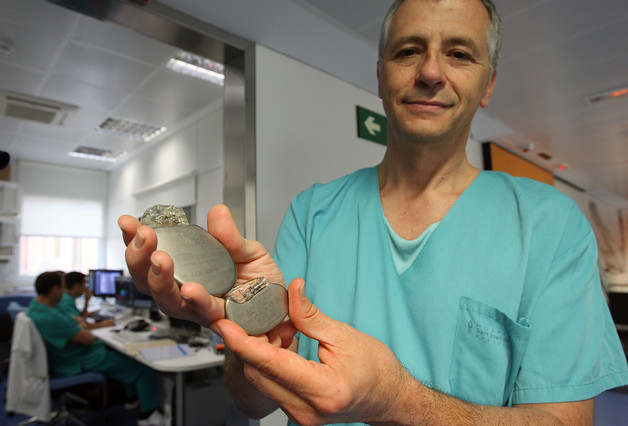
El corazón tiene un ritmo marcado por sus propias células, que de manera automática se contraen y liberan un estímulo eléctrico que desencadena el latido. Sin embargo, si el tejido se deteriora, generalmente por motivos de edad, las células pueden dejar de hacer su función. "Lo que hace el marcapasos es sustituir esa señal que da lugar a la contracción por un estímulo externo", resume Mont. En cierta manera, el dispositivo es como un pequeño motor. Un motor plano, de forma casi circular y con una batería recambiable.
Los marcapasos se suelen poner por debajo de la clavícula, creando una especie de "bolsillo" debajo de la piel, explica Mont (en casos especiales también pueden ir bajo el músculo). El tamaño se ha reducido hasta el punto de que hoy en día miden solo cinco centímetros de diámetro y uno de grosor, aunque son sensiblemente mayores si incorporan funciones de desfibrilador para tratar arritmias o taquicardias. "Para una persona delgada llevar un marcapasos puede suponer una cierta molestia, pero una corpulenta apenas lo nota", insiste el cardiólogo.
-Sin contraindicaciones
Al corazón se llega luego con dos electrodos que se introducen por la vena subclavia, prosigue el especialista del Clínic. "No hay contraindicaciones especiales para llevar un marcapasos, sino solo dificultades especiales", como pacientes que tengan anomalías de las venas que dificulten la llegada de los cables. De hecho, la principal dificultad actual es el surgimiento de infecciones por culpa de la incisión.
"Los marcapasos se pueden programar a demanda en función de las necesidades ¿ilustra Mont¿. Podemos decirle: espérate si hay ritmo propio y lanza un estímulo solo cuando sea necesario". Además de mejorar la calidad de vida, ello permite ahorrar batería y alarga la vida del dispositivo. "En general, podemos esperar que el generador, incluida la pila, dure entre 7 y 10 años", añade. Cuando llega el momento, se hace una incisión y se pone uno nuevo. Si no hay problemas, no hay ni que cambiar los cables.
Una vez colocado, un marcapasos puede regularse y se le pueden introducir cambios por ondas electromagnéticas e incluso con radiofrecuencias. Fernández Lozano precisa que los modelos más modernos incorporan programas de autodiagnóstico y programación automática.
Al corazón se llega luego con dos electrodos que se introducen por la vena subclavia, prosigue el especialista del Clínic. "No hay contraindicaciones especiales para llevar un marcapasos, sino solo dificultades especiales", como pacientes que tengan anomalías de las venas que dificulten la llegada de los cables. De hecho, la principal dificultad actual es el surgimiento de infecciones por culpa de la incisión.
"Los marcapasos se pueden programar a demanda en función de las necesidades ¿ilustra Mont¿. Podemos decirle: espérate si hay ritmo propio y lanza un estímulo solo cuando sea necesario". Además de mejorar la calidad de vida, ello permite ahorrar batería y alarga la vida del dispositivo. "En general, podemos esperar que el generador, incluida la pila, dure entre 7 y 10 años", añade. Cuando llega el momento, se hace una incisión y se pone uno nuevo. Si no hay problemas, no hay ni que cambiar los cables.
Una vez colocado, un marcapasos puede regularse y se le pueden introducir cambios por ondas electromagnéticas e incluso con radiofrecuencias. Fernández Lozano precisa que los modelos más modernos incorporan programas de autodiagnóstico y programación automática.
-A la cola de Europa
Un paciente suele visitar al especialista una vez por año, aunque "sería mejor dos", en opinión del médico del Hospital Puerta de Hierro. "En cualquier caso, en un futuro cercano podremos hacer el seguimiento hospitalario desde una consola en el domicilio. Todo se simplificará", añade. Según Fernández Lozano, muchos marcapasos están infrautilizados, es decir, ofrecen más posibilidades de las que luego se programan, un problema que atribuye a que "a lo mejor" España no cuenta con suficientes especialistas.
"Diría que al menos el 95% de los pacientes que necesitan un marcapasos en España ya lo llevan, un buen índice, pero no sucede lo mismo con los desfibriladores ¿concluye Fernández¿. Con una tasa del 60%, estamos a la cola de Europa".
Un paciente suele visitar al especialista una vez por año, aunque "sería mejor dos", en opinión del médico del Hospital Puerta de Hierro. "En cualquier caso, en un futuro cercano podremos hacer el seguimiento hospitalario desde una consola en el domicilio. Todo se simplificará", añade. Según Fernández Lozano, muchos marcapasos están infrautilizados, es decir, ofrecen más posibilidades de las que luego se programan, un problema que atribuye a que "a lo mejor" España no cuenta con suficientes especialistas.
"Diría que al menos el 95% de los pacientes que necesitan un marcapasos en España ya lo llevan, un buen índice, pero no sucede lo mismo con los desfibriladores ¿concluye Fernández¿. Con una tasa del 60%, estamos a la cola de Europa".
**Publicado en "EL PERIODICO DE CATALUNYA"
La salud cardiovascular de quien toma algo de alcohol supera a la del abstemio, según estudios del Hospital Clinic de Barcelona
Quien limita su consumo de vino, mejor si es tinto, a poco más de una copa diaria favorece todas las funciones de su corazón e incluso consigue mantener una salud cardiovascular mejor que las personas abstemias. Esta curiosa observación ha quedado confirmada en las cuatro investigaciones que un equipo de médicos del Hospital Clínic, de Barcelona, coordinados por Ramon Estruch, han realizado en los últimos siete años sobre el efecto que diferentes vinos de mesa, y alguna bebida de mayor grado alcohólico, ejercen en el cuerpo humano.
Lo comprobado hasta ahora es que los hombres que toman a diario un par de copas de tinto (270 mililitros) y las mujeres que beben una copa y media consiguen que su sangre permanezca en un saludable equilibrio lipídico: les aumenta el colesterol bueno (HDL), protector de las arterias, y se les oxida y reduce el colesterol malo (LDL), el que se adhiere a la pared de los vasos sanguíneos y puede formar trombos e infartos.
Otro dato constatado es el efecto antiinflamatorio que tienen las citadas proporciones diarias de vino en las arterias. La inflamación arterial es uno de los factores que intervienen en el infarto de miocardio.
Estos efectos se atribuyen tanto a los polifenoles que contiene el vino --sustancias que contienen numerosas frutas y verduras en variada proporción-- como a la fermentación bacteriana del azúcar de la uva, es decir, al alcohol. De ahí que la mayoría de investigaciones emprendidas por Estruch hayan comparado distintos vinos con la ginebra, una bebida de alta graduación (40º), desprovista de otras sustancias, que se ha cotejado reduciendo la dosis diaria para poder juzgar concentraciones alcohólicas equivalentes.
**Publicado en "EL PERIODICO DE CATALUNYA"
Lo comprobado hasta ahora es que los hombres que toman a diario un par de copas de tinto (270 mililitros) y las mujeres que beben una copa y media consiguen que su sangre permanezca en un saludable equilibrio lipídico: les aumenta el colesterol bueno (HDL), protector de las arterias, y se les oxida y reduce el colesterol malo (LDL), el que se adhiere a la pared de los vasos sanguíneos y puede formar trombos e infartos.
Otro dato constatado es el efecto antiinflamatorio que tienen las citadas proporciones diarias de vino en las arterias. La inflamación arterial es uno de los factores que intervienen en el infarto de miocardio.
Estos efectos se atribuyen tanto a los polifenoles que contiene el vino --sustancias que contienen numerosas frutas y verduras en variada proporción-- como a la fermentación bacteriana del azúcar de la uva, es decir, al alcohol. De ahí que la mayoría de investigaciones emprendidas por Estruch hayan comparado distintos vinos con la ginebra, una bebida de alta graduación (40º), desprovista de otras sustancias, que se ha cotejado reduciendo la dosis diaria para poder juzgar concentraciones alcohólicas equivalentes.
**Publicado en "EL PERIODICO DE CATALUNYA"
Subscribe to:
Posts (Atom)