Traductor

20 September 2011

Protocolo pionero de Sanidad para tratar el síndrome químico múltiple


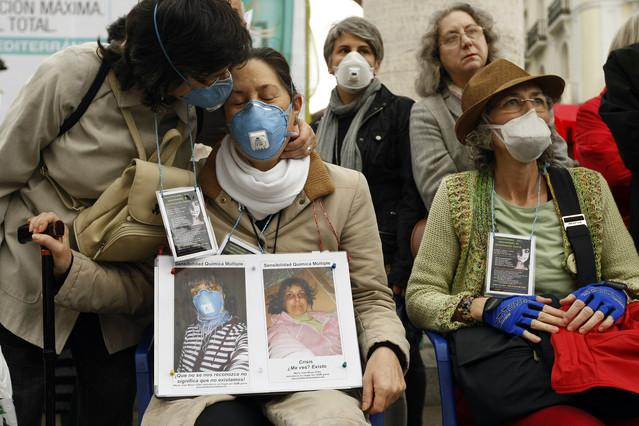
El reconocimiento de la sensibilidad química múltliple (SQM) como enfermedad está a un paso. Y, sobre todo, la posibilidad de un mejor diagnóstico y tratamiento del hasta medio millón de afectados que, según algunos especialistas, pueden padecerla en España en algún grado. El Ministerio de Sanidad ha concluido el borrador de una estrategia y un protocolo, elaborados por científicos y profesionales sanitarios, pioneros en Europa, que lo hará posible, según explicó el secretario general, José Martínez Olmos.

La iniciativa desterrará la incomprensión y el escepticismo de muchos médicos e incluso familiares que no conocen esta compleja enfermedad, crónica, incurable y en aumento, caracterizada por la pérdida progresiva de tolerancia a agentes químicos tan diversos y comunes como productos de limpieza, colonias, disolventes, ciertos alimentos, medicamentos y radiaciones electromagnéticas.
El borrador, cuya larga gestación se inició en abril del 2010, será enviado esta semana a las asociaciones de enfermos y a las comunidades autónomas para que realicen sus aportaciones. Luego será presentado en el Consejo Interterritorial de Salud, para su aprobación definitiva y su puesta en marcha. El reconocimiento a efectos laborales y para obtener la incapacidad permanente, uno de los caballos de batalla de los afectados, es una competencia que, según Olmos no corresponde a Sanidad sino a otros departamentos ministeriales o a la Unión Europea.


**Publicado en "EL PERIODICO DE CATALUNYA"


El 90% de las gafas de sol que se venden en mercadillos y bazares es perjudicial


Un estudio de la Universidad Complutense de Madrid ha constatado que más del 90% de las gafas de sol que se venden en mercadillos y puestos callejeros no protegen los ojos adecuadamente de las radiaciones solares o son directamente dañinas para la visión. "Lo preocupante de los resultados que arroja el estudio no es que un 25% de las gafas no protejan de la radiación solar, sino que además un 93% son dañinas para la visión. Un 45% de la muestra analizada provoca visión defectuosa, un 26% no pueden ser utilizadas para la conducción y un 57% provoca desviaciones oculares indebidas y somete al ojo a un maltrato que puede generar importantes patologías", afirma Celia Sánchez-Ramos, directora del Departamento de Óptica II: Optometría y Visión del centro universitario. "Además, el usuario no es consciente del daño que puede estar produciéndose en sus ojos, ya que su visión es adecuada, pero los defectos de las lentes pueden dar lugar a medio plazo a daños visuales", añade.
Ante estos datos, el Colegio de Ópticos-Optometristas ha solicitado que estos productos sean considerados de carácter sanitario. Ello implicaría un mayor control, pero también una restricción de los puntos de venta. Si la UE -que es la que tiene las competencias- lo aprobara, su venta quedaría restringida a las ópticas, y no podría haber gafas de sol en grandes superficies o tiendas de moda.
"Hay tres aspectos básicos a los que debemos prestar atención: la compra debe realizarse en ópticas, la elección de las gafas tiene que atender al uso de las mismas y deben ser adaptadas a la percepción visual de cada persona." Así por ejemplo, para la conducción se recomienda lentes que transmitan al menos el 8% de la luz visible, sin embargo, para navegar la protección debe ser más elevada que en la playa o en la ciudad, debido al reflejo del sol sobre el agua.
Las gafas y filtros de protección solar con calidad óptica sirven para proteger los ojos de enfermedades oculares, también reducen la fatiga ocular y mejoran la percepción visual, indica el colegio. Es imprescindible su uso para conseguir mantener la salud visual de niños y adultos. En este sentido, Sánchez-Ramos, señala: "Considerar las gafas de sol productos sanitarios y permitir su comercialización sólo en ópticas, es una medida que ayudará a solucionar el grave asunto de Salud Pública que supone la venta de más de 20 millones de 'sucedáneos de gafas de sol' en España, todos los años, en mercadillos y bazares".


**Publicado en "EL PAIS"

Common genetic variations linked to both schizophrenia and bipolar risk

Common genetic variants contribute to the risk of schizophrenia and bipolar disorder, an international research consortium has discovered. Schizophrenia and bipolar disorder are common and often devastating brain disorders, affecting around one per cent of the world's population. A team including Cardiff University scientists has found new molecular evidence that 11 genetic regions have strong links with these diseases, including six regions not previously observed. The researchers also found that many of these DNA variations contribute to both diseases.
The findings, reported by the Psychiatric Genome-Wide Association Study Consortium (PGC), represent significant advances in these severe and debilitating disorders.
The findings, based on genetic data from tens of thousands of patients, have just been published online in two papers in the journal Nature Genetics. Professors Michael O'Donovan, Michael Owen and Nick Craddock from the MRC Centre for Neuropsychiatric Genetics and Genomics at Cardiff's School of Medicine, Cardiff University, made a significant contribution of data, analysis and management to the study.
Professor O'Donovan said: "The genetic variants we have identified are common in the population -- everyone carries many of them, but people with the disorders carry more.
"The success of this study demonstrates the need for international co-ordination in harnessing data from very large samples to exploit the power of genetics to reveal new insights. Over the next two years we expect to have data from study samples that are three or four times larger than those we have now, and this can be expected to have the same impact for our research as ever more powerful particle accelerators have had in physics."
Professor Owen added: "Many genes are clearly involved in these disorders and it will be a few years yet till we are able to see a large part of the picture. However, for the first time, we are in a position to make tentative functional links between some of the genes identified.
"One particularly exciting finding is the involvement of a type of molecule, known as a microRNA, which acts as a molecular switch to turn off other genes. This microRNA is also known to regulate aspects of the development and maturation of nerve cells in the brain. The findings suggest disruption of these development processes as likely factors in the origins of mental disorder."
Both schizophrenia and bipolar disorder usually strike in late adolescence or early adulthood. Some of the most prominent symptoms in schizophrenia are persistent delusions, hallucinations and cognitive problems. Bipolar disorder (or manic-depressive illness) is characterized by episodes of severe mood problems including mania and depression. Despite the availability of treatments, these illnesses are usually chronic, often leads to prolonged disability and personal suffering. Family history is a strong risk factor for both disorders. The new findings are further evidence for the general assumption that dozens of genes, along with environmental factors, contribute to disease risk.

**Source: Cardiff University

El gasto farmacéutico frena su descenso en agosto

El control del gasto farmacéutico (lo que pagan las comunidades por los medicamentos dispensados en boticas con receta oficial) parece que ha tocado suelo. Tras los datos de julio hechos públicos el 7 de septiembre por el Ministerio de Sanidad, los de agosto que se acaban de conocer confirman que hay un cambio de tendencia. En el último mes con datos el descenso interanual está en el 8,85%. Es una cifra objetivamente buena (hace dos años el aumento era del 4,78%), pero lo que puede alarmar es la tendencia.
Hace 17 meses esta cifra -uno de los indicadores más claros del gasto del sistema, aunque solo sea porque es la más controlada y mejor conocida- empezó a bajar. Una serie de rebajas de precios impuestas dentro del plan de choque contra la crisis consiguió lo que no parecía posible: que el gasto en vez de crecer mes a mes, disminuyera. En junio de este año, este descenso llegó a su máximo: fue del -9,42%. En julio, se mantuvo casi igual (el -9,34%). En agosto la curva confirmó su tendencia a repuntar.
En verdad, el gasto depende de dos factores: las recetas y el precio medio de estas. Esta última partida ha bajado en los últimos 12 meses el 10,89%, fiel reflejo de los descensos de precios decretados. Pero la incorporación de algunos nuevos productos hacen que en este concepto también haya un repunto (en julio la caída fue del 11,10% y en junio del 11,25%). La otra partida, el número de recetas, que es el reflejo del uso del sistema, nunca ha llegado a cifras negativas en su crecimiento. En agosto creció un 6,42% con respecto al mismo mes del año anterior, lo que sitúa el acumulado interanual en una variación del 2,28%.
Esta última variable es la que organizaciones como Farmaindustria o los colegios de farmacia creen que es la clave del gasto. Según ellos, mientras no se reduzca, las medidas que se tomen rebajando el precio de los medicamentos serán solo coyunturales.
Eso sí, en agosto todavía no estaba en vigor el decreto que establece que los médicos deben recetar por principio activo.

**Publicado en "EL PAIS"

Survey suggests that informed consent process important to surgery patients in teaching hospital

A survey of patients receiving treatment in a teaching facility found that patients prefer to be informed of trainee participation in their care, and consent rates appear to vary based on scenarios describing increased levels of resident participation, according to a report published Online First by Archives of Surgery, one of the JAMA/Archives journals. According to background in the article, the concept of surgeon-patient interaction prior to surgery can be traced back as far as ancient Greece; however, the formal system of informed consent is more modern. "Currently, no widely accepted guidelines or policies exist for providing information regarding the role of surgical trainees to the patient during the informed consent process," the authors write. "The accepted standard is to provide information that 'a reasonable patient' would want and would need to know to make an informed decision, but this counseling may vary widely by health care professional, setting, and type of surgical procedure."
Christopher R. Porta, M.D., and colleagues from Madigan Army Health System, Tacoma, Wash., conducted an anonymous questionnaire at a tertiary-level U.S. Army hospital and referral center, to evaluate patient perceptions and willingness to participate in surgical resident education and training programs.
The authors distributed 500 surveys, 316 (63.2 percent) of which were returned and included in the study. Most patients indicated no preference for a private hospital versus a teaching hospital, however of those who did, more preferred a teaching hospital to a private facility for overall care (24.9 percent vs. 8.8 percent) and minor surgical procedures (28.2 percent vs. 12 percent), but hospital preference for major surgical procedures was similar (24.7 percent vs. 26.6 percent). Additionally, 91.2 percent of those patients who indicated a facility preference reported that their care in a teaching hospital would be equivalent to or better than that of a private hospital.
Patients also indicated they overwhelmingly preferred to be informed of resident participation in their surgical procedure, regardless of whether it was a major procedure (95.7 percent) or a minor surgery (87.5 percent). A total of 94 percent of respondents indicated they would consent to involvement of a surgical resident, however this decreased to 85 percent for a surgical intern and 79.9 percent for medical student involvement. When provided with specific scenarios involving trainee participation, 57.6 percent of patients consented to having a junior resident act as the first assistant, 25.6 percent consented to the resident acting as the operation surgeon with direct staff observation, and 18.2 percent consented to resident participation without direct staff observation.
The authors conclude that their findings show, "patients routinely would prefer to be informed regarding details of trainee participation in their care, and that this information would significantly affect their willingness to consent." However, they also note, "Although most patients express an overall willingness to participate in surgical education, wide variations can be observed in the actual consent rates for specific training situations. This decreased willingness to consent and the potential effect on training programs must be considered when discussing policy initiatives aimed at improving informed consent."

**Source: JAMA and Archives Journals

The cellular intricacies of cystic fibrosis

When researchers discovered the primary genetic defect that causes cystic fibrosis (CF) back in 1989, they opened up a new realm of research into treatment and a cure for the disease. Since then, scientists have been able to clone the defective gene and study its effects in animals. Now researchers at the University of North Carolina at Chapel Hill have developed a technique for observing the defects at work in human tissue donated by patients with CF. This technique has yielded an extraordinary view of the cellular intricacies of CF, which Martina Gentzsch, assistant professor of cell and developmental biology, will discuss at the 7th International Symposium on Aldosterone and the ENaC/Degenerin Family of Ion Channels, being held September 18-22 in Pacific Grove, Calif. The meeting is sponsored by the American Physiological Society. Her poster presentation is entitled, "The Cystic Fibrosis Transmembrane Conductance Regulator Inhibits Proteolytic Stimulation of ENaC."
Ion Transport Processes in CF
Cystic fibrosis is caused by a mutation in the gene that encodes a protein called cystic fibrosis transmembrane conductance regulator (CFTR), which functions as a chloride channel at the surface of airways and moves chloride out of the cells. CFTR also regulates another protein called epithelial sodium channel (ENaC), which is responsible for transporting sodium into cells. Thus far, scientists have been able to establish that when the CFTR mutation is present, ENaC becomes overactive and causes the cells in the lungs to absorb too much sodium. Water follows the sodium from the cells' surfaces into the cells, and as a result, the airways become dry and mucous becomes thick and sticky, leading to infections in the lungs.
To observe how CFTR regulates ENaC, Dr. Gentzsch and her team took cells from healthy lung tissue and CF lung tissue and maintained them in a liquid medium. The cells' surfaces were exposed to air, which prompted the cells to grow and behave as though they were still inside human lungs. Then the team studied proteolytic cleavage of ENaC, a process in which the ENaC protein is cut by enzymes called proteases at specific sites on the protein. This limited cleavage causes ENaC to become active. When the team analyzed the cells' behavior, they found that ENaC was more likely to have undergone cleavage in cells from CF tissue.
According to Dr. Gentzsch, these observations prompted two questions. First, what role does CFTR play in regulating ENaC cleavage? Second, why is ENaC cleavage not regulated in CF?
"CFTR binds to ENaC, so our initial thought was that close contact of ENaC to CFTR protects ENaC from being cleaved. But another possibility is that CFTR is responsible for suppressing ENaC cleavage and activation," said Dr. Gentzsch. In other words, the absence of a normally functioning CFTR protein may cause ENaC overactivity. Because there is more cleavage when the CFTR mutation is present, it implies that healthy CFTR prevents ENaC cleavage and activation, but defective CFTR does not.
Either way, Dr. Gentzsch feels that both CFTR and ENaC should be considered when developing therapies for CF. "Successful treatments should address both decreased CFTR function and increased salt absorption caused by ENaC overactivity."

**Source: American Physiological Society

Scientists disarm HIV in step towards vaccine

Researchers have found a way to prevent HIV from damaging the immune system, in a new lab-based study published in the journal Blood. The research, led by scientists at Imperial College London and Johns Hopkins University, could have important implications for the development of HIV vaccines. HIV/AIDS is the third biggest cause of death in low income countries, killing around 1.8 million people a year worldwide. An estimated 2.6 million people became infected with HIV in 2009.
The research shows that HIV is unable to damage the immune system if cholesterol is removed from the virus's membrane. Usually, when a person becomes infected, the body's innate immune response provides an immediate defence. However, some researchers believe that HIV causes the innate immune system to overreact and that this weakens the immune system's next line of defence, known as the adaptive immune response.
In the new study, the researchers removed cholesterol from the membrane surrounding the virus and found that this stopped HIV from triggering the innate immune response. This led to a stronger adaptive response, orchestrated by immune cells called T cells. These results support the idea that HIV overstimulates the innate response and that this weakens the immune system.
Dr Adriano Boasso, first author of the study, from Imperial College London, said: "HIV is very sneaky. It evades the host's defences by triggering overblown responses that damage the immune system. It's like revving your car in first gear for too long. Eventually the engine blows out.
"This may be one reason why developing a vaccine has proven so difficult. Most vaccines prime the adaptive response to recognise the invader, but it's hard for this to work if the virus triggers other mechanisms that weaken the adaptive response."
HIV takes its membrane from the cell that it infects. This membrane contains cholesterol, which helps to keep it fluid. The fluidity of the membrane enables the virus to interact with particular types of cell. Cholesterol in the cell membrane is not connected to cholesterol in the blood, which is a risk factor for heart disease but is not linked to HIV.
Normally, a subset of immune cells called plasmacytoid dendritic cells (pDCs) recognise HIV quickly and react by producing signalling molecules called interferons. These signals activate various processes which are initially helpful, but which damage the immune system if switched on for too long.
In collaboration with researchers at Johns Hopkins University, the University of Milan and Innsbruck University, Dr Boasso's group at Imperial have discovered that if cholesterol is removed from HIV's envelope, it can no longer activate pDCs. As a consequence, T cells, which orchestrate the adaptive response, can fight the virus more effectively.
The researchers removed cholesterol using varying concentrations of beta-cyclodextrin (bCD), a derivative of starch that binds cholesterol. Using high levels of bCD they produced a virus with a large hole in its envelope. This permeabilised virus was not infectious and could not activate pDCs, but was still recognised by T cells. Dr Boasso and his colleagues are now looking to investigate whether this inactivated virus could be developed into a vaccine.
"It's like an army that has lost its weapons but still has flags, so another army can recognise it and attack it," he said.
The research was funded by the Wellcome Trust and the National Institutes of Health.

**Source: Imperial College London

CONTACTO · Aviso Legal · Política de Privacidad · Política de Cookies

Copyright © Noticia de Salud