
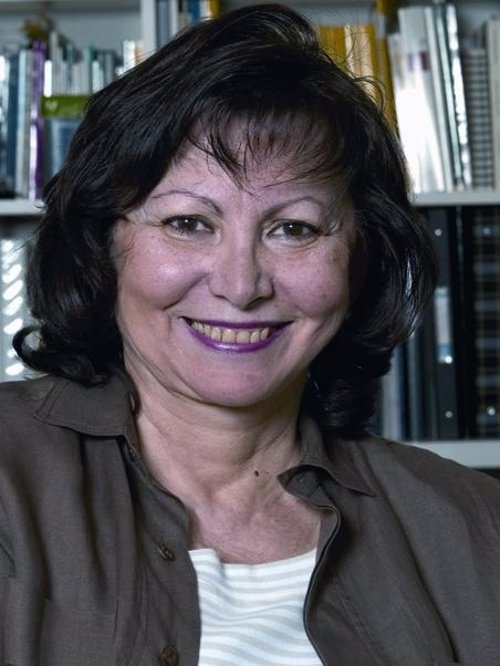
A partir del próximo 1 de abril, Carlota Gómez asumirá la Dirección de Comunicación del Grupo Bayer en España, integrando en un único equipo los hasta ahora departamentos de Comunicación de Bayer HealthCare y Comunicación Corporativa.

Carlota Gómez se encargará de definir y coordinar la comunicación en torno a los diferentes negocios del grupo químico farmacéutico así como gestionar la reputación corporativa de la marca Bayer en España. La nueva responsable reportará directamente al Consejero Delegado de Bayer Hispania, Rainer Krause.

Carlota Gómez inició su carrera como periodista hace más de diez años en medios de comunicación locales para más tarde pasar al ámbito de la comunicación económica y política. Antes de incorporarse a Bayer trabajaba en agencia de comunicación y relaciones públicas gestionando cuentas nacionales e internacionales.

En 2007 se incorporó al departamento de Comunicación de Bayer HealthCare. Desde entonces ha asumido diferentes responsabilidades en comunicación externa e interna, tanto en el área institucional como de producto. La nueva directora de comunicación cuenta además con experiencia internacional dentro de la compañía en la sede de Bayer en Leverkusen y Berlín.

Carlota Gómez es licenciada en Periodismo por la Universitat Autònoma de Barcelona y cuenta con un Máster en Comunicación Empresarial por la Universitat Pompeu Fabra.
But treatment with the antibiotic meropenem plus another drug, clavulanate, offers new hope for dealing with the disease.
"We've tested this combination against laboratory strains of Mtb, XDR and MDR strains from patients," explained Blanchard, who is Professor of Biochemistry at the Albert Einstein School of Medicine of Yeshiva University in New York City. "In all cases, the combination doesn't just slow down growth -- it kills the bacterium in laboratory tests."
The standard TB treatment consists of a so-called "short-course" of four drugs that was developed in the 1960s and 1970s. Patients take isoniazid, rifampin, pyrazinamide and ethambutol for two months, and then isoniazid and rifampicin alone for an additional four months.
"As you can well imagine, after 40 or 45 years of people being treated with the same drugs, what's happening is that the bacterium is developing resistance to those drugs," said Blanchard. "Some forms, or strains, are resistant to many drugs (MDR, or multidrug-resistant), and some are resistant to almost all known antibiotics (XDR, or extensively drug-resistant). A physician I know in India just reported a strain of TB that is totally drug-resistant. There's nothing currently available that he can use to treat these patients."
But now, there's hope. Blanchard and colleagues at Einstein and the National Institutes of Health found the potent two-drug combination that knocks out regular, MDR and XDR strains of Mtb. Discovery of the drug combo's effectiveness emerged from a study by Blanchard's team. Mtb microbes have an enzyme, beta-lactamase, that destroys many types of antibiotics, even meropenem and others in its medicinal family, which is called the "beta-lactams" or "carbapenems." These antibiotics were specifically developed with a molecular architecture to withstand the effects of the beta-lactamase enzyme. The increase in antibiotic resistance, however, reduced the effectiveness of these medications, and drug companies began marketing combinations of antibiotics and clavulanate. Those medications now are the last resort for treating certain drug-resistant infections.
Blanchard and colleagues found that clavulanate could stop this enzyme in TB microbes from destroying antibiotics. In doing so, it clears the way for antibiotics to do their job. The best combination in their research was clavulanate and meropenem, an ultra-broad spectrum antibiotic given by injection.
The two-drug combination also cuts in half the number of drugs that a patient would have to take compared with the current standard treatment regime, which would make it easier for a patient to stick with the treatment. Meropenem is expensive, but its cost is expected to decline later this year when it goes off-patent, and generic drug companies can begin producing low-cost versions of it.
Clinical trials testing safety and effectiveness of the two-drug treatment in people have not yet been done. However, a physician in Brussels, Dr. Marie-Christine Payen, has reported using the drugs to treat a young patient with severe TB. "Clinical validation of our biochemical studies has come with the recent publication of this case study in which a 14 year-old girl was cured after eight months of treatment," said Blanchard.
Einstein has filed a patent application on the two-drug combination to encourage drug companies to get involved with clinical trial development and improvements to the treatment, he noted.
The scientists acknowledged funding from the National Institutes of Health (NIH; AI33696 to J.S.B.) and in part by the Intramural Research Program of the NIH, National Institute of Allergy and Infectious Diseases.
**Published in "SCIENCE DAILY"