Traductor

05 April 2012

Nuevas dudas sobre el cribado de detección del cáncer de próstata


La Alta Autoridad en Salud francesa (HAS, un organismo público consultivo) considera que “no es demostrable” la eficacia de esta prueba. Por un lado, porque no está claro el peso de los distintos factores de riesgo que intervienen en la enfermedad. Por otro, por su lenta e irregular evolución,  su tardía aparición (a los 71 años de media) y el elevado porcentaje de neoplasias asintómáticas. En todos estos casos, la detección temprana no sería útil y las medidas terapéuticas aportarían más riesgos que beneficios.
La prueba arroja muchos
“falsos positivos”, lo que puede implicar “riesgos secundarios”
A ello se suma el elevado número de “falsos positivos” que arroja la prueba, lo que puede implicar “riesgos secundarios” derivados a la biopsia o al tratamiento, como impotencia, incontinencia urinaria o problemas psicológicos. Por ello, quienes se sometan a este analisis, deben hacerlo “con conocimiento de causa”, y sabiendo que “en ocasiones deriva en operaciones o irradiaciones inútiles, con duras consecuencias para la sexualidad y la continencia de hombres jóvenes y activos”.

“Es una prueba muy controvertida”, admite Josep Maria Borràs, responsable de la Estrategia Nacional en Cáncer de Ministerio de Sanidad. Borràs apunta que en España no se recomienda el PSA como prueba de cribado debido a su falta de precisión, al contrario de las mamografías. No solo por falsos positivos, también puede resultado puede confundirse con una prostatitis, traumatismos o hiperplasia prostática benigna.
“El año pasado dos importantes ensayos clínicos arrojaron resultados contradictorios sobre su utilidad. Uno sugirió que el cribado no servía para mejorar el pronóstico de los pacientes; otro, sin embargo, si aportaba cierta mejora en el porcentaje de supervivencia”, explica Borràs. “Ambos coincidieron en el riesgo de sobrediagnóstico”.
Dos ensayos clínicos dieron resultados contradictorios sobre la utilidad del PSA
En todo caso, Borràs destaca su utilidad como prueba rápida de diagnóstico -"su problema y su ventaja es que es muy fácil de hacer"- y, especialmente, en la evaluación de la respuesta al tratamiento del tumor, ya que permite seguir su evolución de forma cómoda (con un simple análisis de sangre).
El cáncer de próstata es el más frecuente en hombres, por delante de las neoplasias en el pulmón y colon. Según datos de la Asociación Nacional de Urología, cada año se detectan más de 18.800 casos.
La HAS ya advirtió en 2010 que el test aplicado a la población general no era útil. Un año después, otro grupo de expertos también cuestionó este procedimiento de detección de la enfermedad. El United States Preventive Services Task Force desaconsejó en un documento que se hicieran estas pruebas a hombres sanos. En la línea del organismo estatal francés, planteaba el riesgo que suponía que un falso resultado positivo desembocara en tratamientos agresivos irreversibles.
La mayor organización estadounidense de pacientes de cáncer de próstata no se mostró de acuerdo con las recomendaciones de esta entidad con el argumento que la PSA es la mejor prueba existente hasta el momento.

**Publicado en "EL PAIS"
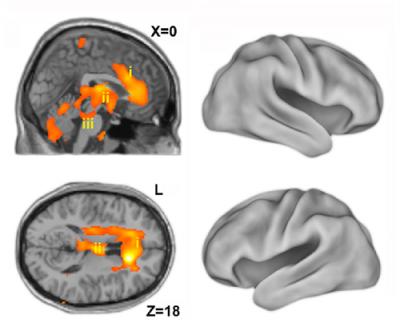
Scientists solving the mystery of human consciousness


This image shows one returning from oblivion -- imaging the neural core of consciousness. Positron emission tomography (PET) findings show that the emergence of consciousness after anesthesia is associated with activation of deep, phylogenetically old brain structures rather than the neocortex. Left: Sagittal (top) and axial (bottom) sections show activation in the anterior cingulate cortex (i), thalamus (ii) and the brainstem (iii) locus coeruleus/parabrachial area overlaid on magnetic resonance image (MRI) slices. Right: Cortical renderings show no evident activations.
Turku PET Center

Awakening from anesthesia is often associated with an initial phase of delirious struggle before the full restoration of awareness and orientation to one's surroundings. Scientists now know why this may occur: primitive consciousness emerges first. Using brain imaging techniques in healthy volunteers, a team of scientists led by Adjunct Professor Harry Scheinin, M.D. from the University of Turku, Turku, Finland in collaboration with investigators from the University of California, Irvine, USA, have now imaged the process of returning consciousness after general anesthesia. The emergence of consciousness was found to be associated with activations of deep, primitive brain structures rather than the evolutionary younger neocortex. These results may represent an important step forward in the scientific explanation of human consciousness. The study was part of the Research Programme on Neuroscience by the Academy of Finland.
"We expected to see the outer bits of brain, the cerebral cortex (often thought to be the seat of higher human consciousness), would turn back on when consciousness was restored following anesthesia. Surprisingly, that is not what the images showed us. In fact, the central core structures of the more primitive brain structures including the thalamus and parts of the limbic system appeared to become functional first, suggesting that a foundational primitive conscious state must be restored before higher order conscious activity can occur" Scheinin said.
Twenty young healthy volunteers were put under anesthesia in a brain scanner using either dexmedetomidine or propofol anesthetic drugs. The subjects were then woken up while brain activity pictures were being taken. Dexmedetomidine is used as a sedative in the intensive care unit setting and propofol is widely used for induction and maintenance of general anesthesia. Dexmedetomidine-induced unconsciousness has a close resemblance to normal physiological sleep, as it can be reversed with mild physical stimulation or loud voices without requiring any change in the dosing of the drug. This unique property was critical to the study design, as it enabled the investigators to separate the brain activity changes associated with the changing level of consciousness from the drug-related effects on the brain. The state-related changes in brain activity were imaged with positron emission tomography (PET).
The emergence of consciousness, as assessed with a motor response to a spoken command, was associated with the activation of a core network involving subcortical and limbic regions that became functionally coupled with parts of frontal and inferior parietal cortices upon awakening from dexmedetomidine-induced unconsciousness. This network thus enabled the subjective awareness of the external world and the capacity to behaviorally express the contents of consciousness through voluntary responses. Interestingly, the same deep brain structures, i.e. the brain stem, thalamus, hypothalamus and the anterior cingulate cortex, were activated also upon emergence from propofol anesthesia, suggesting a common, drug-independent mechanism of arousal. For both drugs, activations seen upon regaining consciousness were thus mostly localized in deep, phylogenetically old brain structures rather than in the neocortex.
The researchers speculate that because current depth-of-anesthesia monitoring technology is based on cortical electroencephalography (EEG) measurement (i.e., measuring electrical signals on the surface of the scalp that arise from the brain's cortical surface), their results help to explain why these devices fail in differentiating the conscious and unconscious states and why patient awareness during general anesthesia may not always be detected. The results presented here also add to the current understanding of anesthesia mechanisms and form the foundation for developing more reliable depth-of-anesthesia technology.
The anesthetized brain provides new views into the emergence of consciousness. Anesthetic agents are clinically useful for their remarkable property of being able to manipulate the state of consciousness. When given a sufficient dose of an anesthetic, a person will lose the precious but mysterious capacity of being aware of one's own self and the surrounding world, and will sink into a state of oblivion. Conversely, when the dose is lightened or wears off, the brain almost magically recreates a subjective sense of being as experience and awareness returns. The ultimate nature of consciousness remains a mystery, but anesthesia offers a unique window for imaging internal brain activity when the subjective phenomenon of consciousness first vanishes and then re-emerges. This study was designed to give the clearest picture so far of the internal brain processes involved in this phenomenon.
The results may also have broader implications. The demonstration of which brain mechanisms are involved in the emergence of the conscious state is an important step forward in the scientific explanation of consciousness. Yet, much harder questions remain. How and why do these neural mechanisms create the subjective feeling of being, the awareness of self and environment -- the state of being conscious?

**Source: Suomen Akatemia (Academy of Finland)

Así podrían ser las gafas de realidad aumentada de Google.

El buscador acaba de publicar un vídeo conceptual de las gafas. No tienen cristales y aún no están a la venta pero Google empezará a probarlas en público.

Más información, en su página de Google+:
http://cort.as/1nqE


DNA sequencing consortium unveils patterns of mutations in autism


It has long been recognized that autism runs in families, suggesting a substantial genetic component to the disease. Yet few genes have so far been identified and the underlying genetic architecture of autism -- that is, how many genes contribute and to what extent they influence a person's chances of developing the disorder -- remains poorly understood. Now, a consortium led by researchers from the Broad Institute, Massachusetts General Hospital (MGH), and six other organizations has taken a step toward addressing these questions by searching for mutations in the fraction of the human genome that codes for proteins. The researchers sequenced this region, known as the "exome," in 175 autism patients and their unaffected parents, looking for single-letter DNA changes present only in the children. Their results, along with simultaneously published findings from two other research groups, suggest modest roles for hundreds of genes in the development of autism and pinpoint a few specific genes as genuine risk factors. The work is described in a paper that appears online April 4 in the journal Nature.
"Autism, like many heritable disorders, results from the action of many genes -- not simply a single gene as in cystic fibrosis or Huntington's disease," said senior author Mark Daly, chief of the Analytic and Translational Genetics Unit at MGH, a senior associate member of the Broad Institute and co-director of its Program in Medical and Population Genetics, and a member of the Broad Institute's Stanley Center for Psychiatric Research. "These genes hold key insights into the true biological causes of autism -- insights we have been unable to gain through other lines of research."
Autism is a common neurodevelopmental disorder characterized by impaired social, behavioral, and communication abilities. Compared to other complex diseases, which are caused by a complicated mix of genetic, environmental, and other factors, autism is highly heritable -- genetics accounts for roughly 80-90% of the risk of developing autism. Yet the majority of autism cases cannot be attributed to known inherited causes.
Researchers in the ARRA Autism Sequencing Collaborative (AASC) -- formed by researchers from the Broad Institute, MGH, Baylor College of Medicine, Mount Sinai School of Medicine, Vanderbilt University, University of Pennsylvania, Carnegie Mellon University, and University of Pittsburgh -- used massively parallel sequencing to help shed light on the genes that influence autism risk. Concordant findings from separate studies by two other groups, from Yale University and the University of Washington respectively, also appear in Nature.
The AASC team focused its attention on a particular set of mutations, specifically single-letter mutations that are not present in the parents' DNA but instead appeared spontaneously in the children -- so-called de novo point mutations. Although it is not yet clear exactly when these changes arise, such genetic variations tend to be rare but also more severe in their impact on gene function. With such extreme effects, they can serve as important signposts toward genes involved in autism.
"The idea is that these de novo mutations can help identify candidate genes much more precisely because a newly arisen point mutation is considered really strong evidence that the mutation -- and the gene it resides in -- is involved in autism," said first author Benjamin Neale, a research affiliate at the Broad Institute and an assistant in genetics at MGH.
The researchers found that less than half of the autism cases studied carried a potentially protein-altering de novo point mutation. While this was only slightly higher than the number expected based on the rate of mutation in the general population, these events are sufficiently rare that they could be used to uncover specific risk genes.
"These data suggest that there is a role for de novo point mutations in the coding region of the genome for autism, but they do not constitute a sufficient cause," said Neale. "That is to say, most de novo variants do not fully explain the disorder in an individual."
To learn more about these mutations and the genes in which they reside, the scientists looked for any meaningful connections among them. Such connections, among different proteins for example, might reveal important biological networks or pathways that underlie autism. By mining these data, Daly, Neale, and their colleagues found that the mutated genes are more connected to each other and to previously identified autism genes than expected. Specifically, the results suggest that some of the proteins encoded by these genes physically interact with each other.
As described in their paper, Daly and his colleagues pooled their data with those published in the other two Nature papers, revealing 18 candidate genes with multiple functional de novo point mutations. Considering the severity of the mutations, the collective results pointed to three genes as strong autism candidates: KATNAL2, a gene whose function is unknown; SCN2A, which encodes a brain protein that forms a channel for sodium ions; and CHD8, a gene that regulates gene transcription and modifies chromatin (the network of proteins that surrounds DNA).

**Source: Broad Institute of MIT and Harvard

La FAD pone en marcha el telefono 901 350 350 de orientación a las familias sobre la droga


|


Sepa cómo ayudar a su hijo si es drogadicto


¿No sabe cómo abordar determinadas cuestiones con sus hijos? ¿Le preocupa que empiecen a coquetear con las drogas? ¿Cree que puede tener un problema de comunicación en su familia? ¿Necesita hablar con alguien?
Para todos los padres y madres que lo deseen, la FAD pone a su disposición la línea telefónica 901 350 350, un servicio de información y orientación sobre prevención e información de sustancias para familias que funciona todos los días del año de 9 a 21 horas. El servicio es absolutamente anónimo y confidencial.
Si lo que necesita es un asesoramiento más continuado, pautas específicas para su familia y seguimiento personalizado, la FAD también pone a su disposición el teléfono 900 22 22 29 que está atendido por un equipo de especialistas en prevención y orientación familiar que le ayudarán a encontrar las claves para manejar adecuadamente situaciones y problemas surgidos en sus relaciones familiares.
Por último, la FAD también ofrece el Servicio de Información y Orientación sobre Drogodependencias (teléfono 900 16 15 15) que brinda información sobre sustancias, conductas adictivas o recursos asistenciales a aquellas personas interesadas y, en especial, a quienes sufren de forma directa los problemas derivados del consumo de drogas.

Red wine, fruit compound could help block fat cell formation


Kee-Hong Kim found that piceatannol, a compound found in red wine and several fruits, blocks immature fat cells from growing.
Purdue Agricultural Communication photo/Tom Campbell

A compound found in red wine, grapes and other fruits, and similar in structure to resveratrol, is able to block cellular processes that allow fat cells to develop, opening a door to a potential method to control obesity, according to a Purdue University study. Kee-Hong Kim, an assistant professor of food science, and Jung Yeon Kwon, a graduate student in Kim's laboratory, reported in this week's issue of the Journal of Biological Chemistry that the compound piceatannol blocks an immature fat cell's ability to develop and grow.
While similar in structure to resveratrol -- the compound found in red wine, grapes and peanuts that is thought to combat cancer, heart disease and neurodegenerative diseases -- piceatannol might be an important weapon against obesity. Resveratrol is converted to piceatannol in humans after consumption.
"Piceatannol actually alters the timing of gene expressions, gene functions and insulin action during adipogenesis, the process in which early stage fat cells become mature fat cells," Kim said. "In the presence of piceatannol, you can see delay or complete inhibition of adipogenesis."
Over a period of 10 days or more, immature fat cells, called preadipocytes, go through several stages to become mature fat cells, or adipocytes.
"These precursor cells, even though they have not accumulated lipids, have the potential to become fat cells," Kim said. "We consider that adipogenesis is an important molecular target to delay or prevent fat cell accumulation and, hopefully, body fat mass gain."
Kim found that piceatannol binds to insulin receptors of immature fat cells in the first stage of adipogenesis, blocking insulin's ability to control cell cycles and activate genes that carry out further stages of fat cell formation. Piceatannol essentially blocks the pathways necessary for immature fat cells to mature and grow.
Piceatannol is one of several compounds being studied in Kim's laboratory for its health benefits, and it is also present in different amounts in red grape seeds and skin, blueberries, passion fruit, and other fruits.
Kim would like to confirm his current finding, which is based on a cell culture system, using an animal model of obesity. His future work would also include determining methods for protecting piceatannol from degrading so that concentrations large enough would be available in the bloodstream to stop adipogenesis or body fat gain.
"We need to work on improving the stability and solubility of piceatannol to create a biological effect," Kim said.

**Source: Purdue University

El buen humor produce adrenalina y estimula las defensas inmunitarias


«La risa es el sol que ahuyenta el invierno del rostro humano» decía Víctor Hugo. Pero hoy no parece que estén los tiempos para la risa. Es más: Cada día se ríe menos. Hace 50 años reíamos una media de 15 minutos al día. Ahora el tiempo se ha reducido a 5. Estamos, por tanto, muy lejos de la dosis diaria de buen humor, que los expertos del Instituto Riza de medicina psicosomática calculan en al menos media hora.
Las ventajas de una buena risa liberatoria es casi una panacea para el espíritu y también para el organismo: El estrés disminuye, el sueño mejora mejor; y corazón, hígado y pulmones están mejor también cuando nos divertimos. Tan importante es la sonrisa para el bienestar que se realizan incluso cursos universitarios, caso de la Sorbona, para aprender a exteriorizar la parte más divertida del carácter.
El entrenamiento para la risa es posible siguiendo igualmente clases de Yoga de la Risa (Hasyayoga), practica que combina la risa incondicional con la respiración profunda. La ideó el médico indio Madan Kataria, quien en 1995 creó el primer Club de la Risa. «Hoy cuenta con millones de seguidores en 75 países del mundo», según Laura Toffolo, fundadora de la asociación nacional yoga de la risa con sede en roma y con más de 40 locales en Italia, donde se ofrecen sesiones siempre gratuitas, además de seminarios y cursos.

«Reír nos salvará»

«El reír nos salvará la vida, está demostrado clínicamente», asegura al «Corriere» el director del departamento de Neurociencia del hospital Fatebenefratelli de Milán, Claudio Mencacci. Sus argumentos son contundentes: Las personas positivas tienen más capacidad de lograr éxito en la vida profesional y social. Reír estimula las defensas inmunitarias, creando la inmunoglobulina A, produce adrenalina, dopamina (la hormona del placer, el neurotransmisor que nos permite tener más iniciativas y seleccionar repuestas positivas). Y al mismo tiempo activa un mecanismo de liberación de endorfina y de encefalinas (nuestras drogas naturales)».
En definitiva, hay que entrenarse y buscar motivos para reír más, porque, como dice un proverbio japonés, «el tiempo que pasa uno riendo es tiempo que pasa con los dioses».

**Publicado en "ABC"

CONTACTO · Aviso Legal · Política de Privacidad · Política de Cookies

Copyright © Noticia de Salud